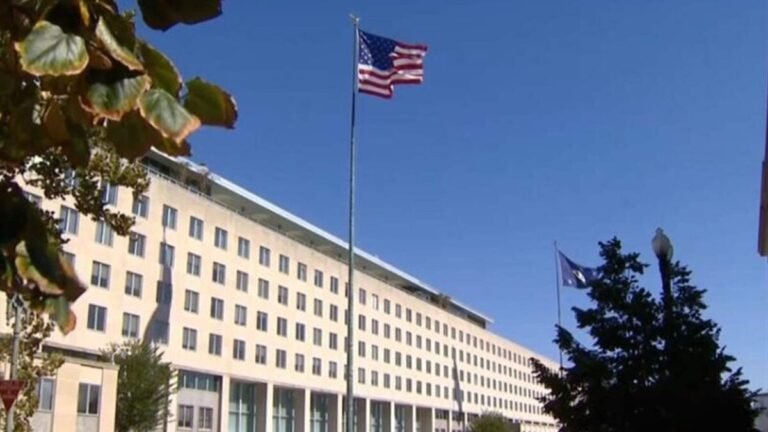
Washington, DC – In a significant escalation of its strategy to combat transnational crime, the US State Department announced its intention to designate two Brazilian criminal groups, the First Capital Command (PCC) and the Red Command (CV), as “foreign terrorist organizations.”
This decision, scheduled to take effect on June 5, has sparked a political firestorm in Brazil, where security concerns intersect with sensitive electoral calculations.
American characterization of “the most violent organizations”
The US State Department justified the decision by describing the two gangs as “among the most violent criminal organizations in Brazil,” citing a long history of documented deadly attacks against police officers and government employees.
US data confirms that the two organizations, whose combined membership is estimated by experts to exceed 50,000, pose a security threat that extends beyond Brazil.
Although most of these groups’ activities and funding are concentrated in Europe, Washington insists that designating them as terrorist entities will enhance its ability to counter their growing influence.
Concerns about violations of sovereignty and political interference
In contrast, this decision was met with strong opposition from the government of President Luiz Inácio Lula da Silva. President Lula expressed his deep concern, considering the American move a “political interference” that benefits his main rival in the upcoming presidential elections, Senator Flavio Bolsonaro.
The Brazilian government maintains a firm legal position: the two groups do not pursue political or ideological goals, and therefore do not meet the international legal criteria for “terrorism.” Brasilia fears that the US designation will open the door for Washington to impose coercive measures or even conduct security operations within Brazilian territory, which would constitute a direct violation of national sovereignty.
Election conflict and Trump’s strategy
This designation comes at a time when the Brazilian opposition—led by supporters of former President Jair Bolsonaro—is exploiting the issue to pressure Lula da Silva, accusing him of “weakness” in the face of organized crime.
Conversely, this US approach is seen as part of a broader strategy adopted by the administration of President Donald Trump, which aims to use military tools and offensive measures to combat “narco-terrorism” in the Western Hemisphere.
This strategy has previously manifested itself in the intensive naval operations led by Washington in the Caribbean and the Pacific, a policy that has often strained relations with countries in the region.
Now, with this decision taking effect in June, US-Brazilian relations face a real test, while internal polarization in Brazil intensifies as the October elections approach.