Tel Aviv, Israel – The Lebanese front is witnessing a dramatic escalation that threatens to unravel the fragile understandings. Israel and Hezbollah have exchanged accusations of violating the ceasefire agreement, amidst intensified military operations and strategic shifts in the tactics employed on the ground.
Heavy toll and ongoing operations
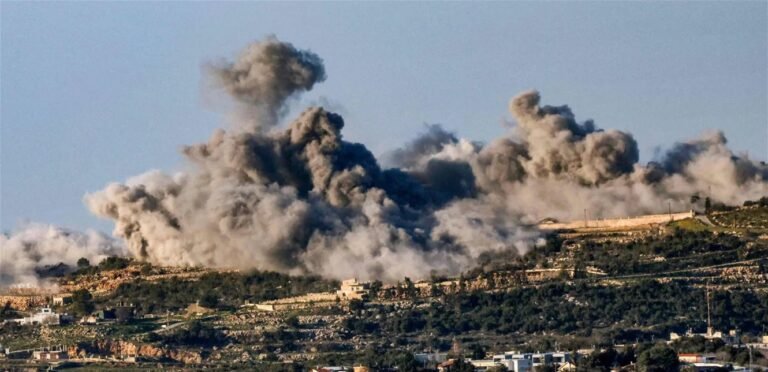
The Israeli military announced on Tuesday, May 12, the results of a large-scale operation since the ceasefire was supposed to take effect. The military spokesperson confirmed that more than 1,100 Hezbollah targets in southern Lebanon had been struck. He also stated that more than 350 Hezbollah fighters, whom he described as “a proxy group for the Islamic Republic,” had been killed.
The army stressed in its statement that attacks targeting military buildings, weapons depots, and launch sites are continuing intensively. It also confirmed that these operations are being carried out under direct orders from the Israeli political leadership. The army stated that the operations are in response to what it described as the party’s “ongoing violations.”
The “drone” battle: Hezbollah’s weapon and the challenge to the occupation
In contrast, Hezbollah’s drones posed the greatest challenge to the invading Israeli forces. Israel’s Channel 12 also reported that the military command is preparing to expand its ground operations deeper into Lebanon, awaiting the green light from the political leadership. This comes in response to the “significant threat” posed by suicide drones that regularly target military gatherings.
In a move reflecting the extent of Israeli concern, the newspaper Yediot Aharonot revealed the military establishment’s decision to develop its offensive capabilities by establishing a factory dedicated to producing explosive-laden drones. This comes as an attempt to create a new balance of deterrence in the drone air force.
Primitive solutions to counter advanced technology
While Israel pursues major industrial solutions, field reports have revealed that the army is resorting to what have been described as rudimentary methods to protect its soldiers from drones. Yedioth Ahronoth also reported the transfer of thousands of meters of fishing nets across the border and their distribution to maneuver units in southern towns. This was done with the aim of “catching” drones and preventing them from exploding over soldiers or inside military installations.
The Israeli army announces almost daily casualties among its forces as a result of these airstrikes. This coincides with the ongoing demolition of buildings and structures in Lebanese border villages. Lebanon and international mediators consider this a blatant violation of Resolution 1701 and the spirit of the recent agreement.