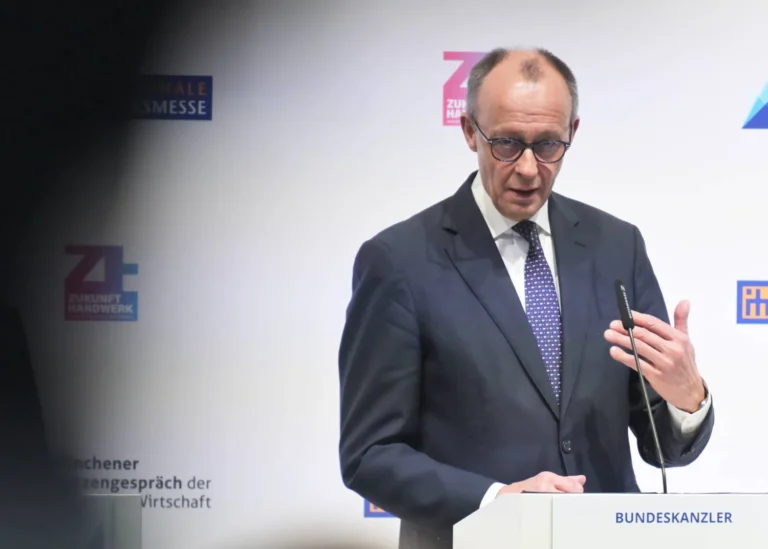
Berlin, Germany – German Chancellor Friedrich Merz issued a firm statement regarding Iranian policies, asserting that the Islamic Republic should no longer hold the region and the world hostage to its schemes.
Merz emphasized that the time has come to definitively end Iran’s nuclear ambitions. He also called for a “complete and permanent” halt to the military nuclear program to guarantee international stability and peace.
Protecting allies and rejecting escalation
In a speech reflecting a shift in the European tone toward Tehran, the German Chancellor stressed the need for the Iranian government to cease all attacks targeting Israel or European partners in the region.
Merz indicated that the security of allies is a red line for Berlin. He emphasized that continuing this aggressive approach will lead to deeper international isolation for Iran. Furthermore, these statements come at a time of escalating tensions in the region, with growing concerns about the conflict widening and its impact on global energy routes and freedom of navigation. Germany views this as a direct threat to its own interests and those of the European continent.
Return to negotiations without delay
For its part, the Meretz party (Christian Democratic Union) joined this hardline stance, issuing a statement calling on Iran to immediately return to the negotiating table.
The party’s statement read: “Iran must stop wasting time and pursuing a policy of procrastination that will ultimately not serve its interests.” The party explained that the international community no longer has the luxury of patience with this “time-buying” strategy. This strategy, the party asserted, is being employed by Tehran to develop its military and nuclear capabilities under the guise of fruitless talks.
Simultaneous international pressures
Mertz’s statements coincide with intensified diplomatic efforts at the UN Security Council, led by Washington and its regional partners, to impose stricter restrictions on Tehran.
Observers believe that the new German stance strengthens the Western pressure front, leaving Iran with only two options: either return to a diplomatic path leading to a comprehensive and fair agreement, or face a new round of international sanctions. These sanctions could include coercive measures under Chapter VII of the UN Charter.