Washington, DC – An analysis published in The Wall Street Journal reveals that US President Donald Trump holds the upper hand in the decision to end the war with Iran.
This comes amid limited congressional influence over the course of military operations,
despite growing political and public opposition within the United States.
Presidential powers exceed
The Wall Street Journal article explained that the American constitutional system grants the president broad powers in conducting wars.
Thus, he can continue military operations without prior congressional approval.
It noted that the War Powers Act, enacted to limit presidential power after the Vietnam War,
has proven largely ineffective, as it is often disregarded without any real legal repercussions.
Relative political support
The Wall Street Journal article also pointed out that the continuation of
the war is linked to the support Trump enjoys from a large segment of the Republican Party.
This is because approximately 70% of the party’s voters still support his decisions.
This gives him political cover within Congress, particularly in the House of Representatives.
Republicans dominate a number of influential constituencies.
Weakness of Congress’s tools
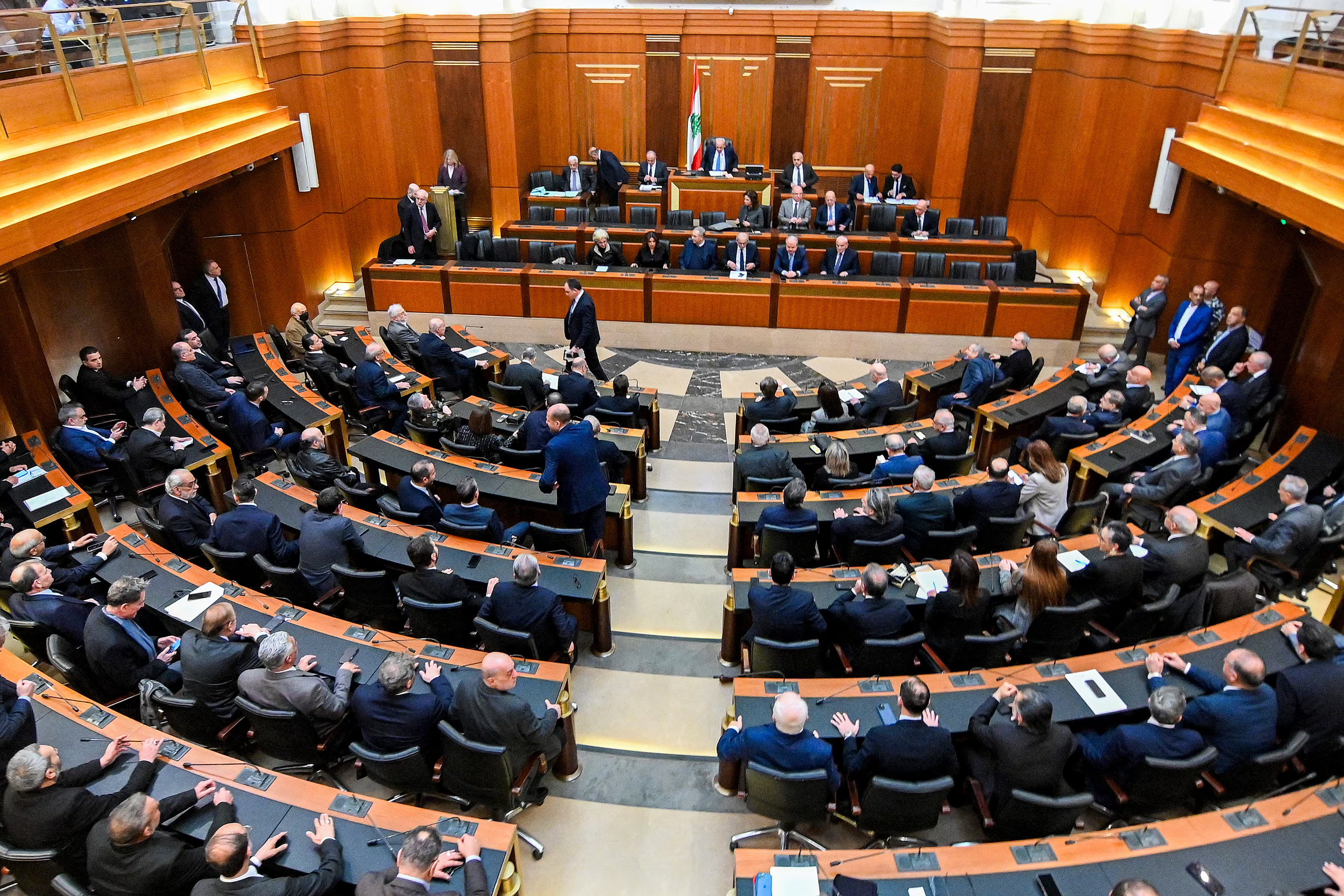
The Wall Street Journal article pointed out that Congress’s attempts to end the war,
whether through legislation or funding cuts, face significant obstacles.
The most prominent of these is the president’s potential veto power,
coupled with the difficulty of securing a sufficient majority to override it.
Furthermore, US courts often deem these disputes “political issues” outside their jurisdiction.
The analysis concluded by noting that the future of the war will remain contingent on the US president’s decision,
given the absence of broad domestic political consensus.
This strengthens the likelihood that the conflict will continue until a presidential decision is made to end it.