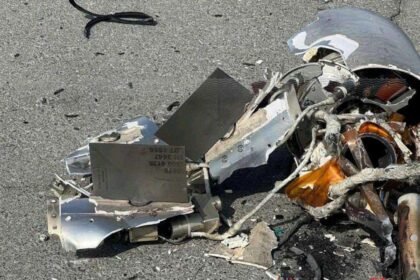
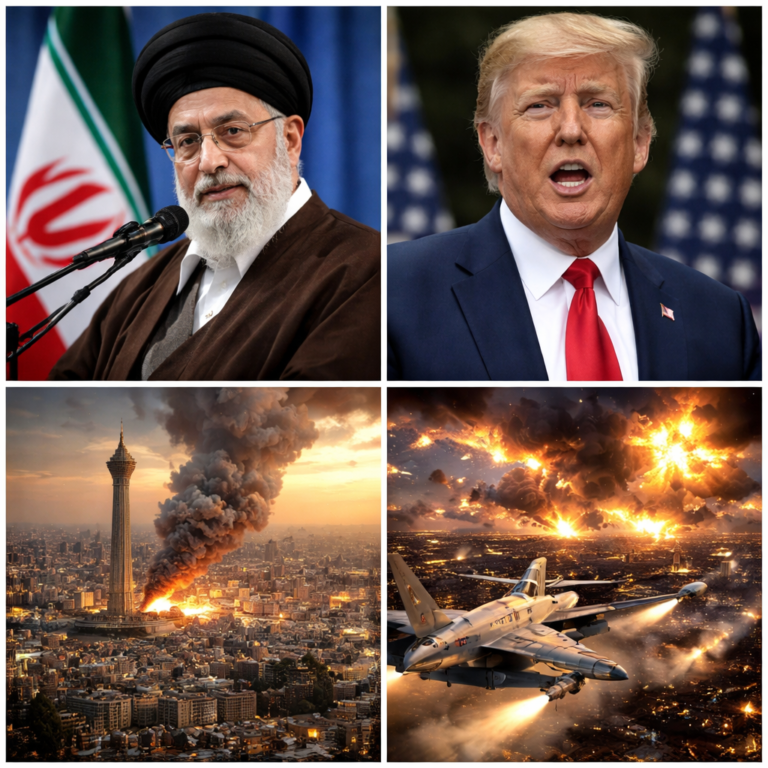
Washington, DC – US President Donald Trump announced that Iranian Supreme Leader Ali Khamenei was killed in the US and Israeli military strikes against targets inside Iran. This development is considered by observers to be the most dangerous in the escalating tensions between Washington and Tehran in decades. Trump stated in media appearances and posts on his official platforms that he “believes the reports” of Khamenei’s death during the recent raids are true. He indicated that the operation targeted senior command centers in Iran. However, there has been no independent confirmation from neutral international sources, while Tehran has officially denied the reports, describing them as “psychological warfare.”
Conflicting official accounts
Trump’s announcement comes amid a rapidly escalating military confrontation between the United States and Israel on one side, and Iran on the other. Conflicting information is also evident. While American and Israeli sources speak of a “qualitative strike” targeting the Iranian leadership, Tehran insists that the Supreme Leader is “safe and sound,” without providing further details. This discrepancy in accounts reflects the intensifying media war, running parallel to developments on the ground. Meanwhile, the internal situation in Iran remains increasingly shrouded in mystery.
Political repercussions within Iran
If Khamenei’s death is confirmed, Iran will face a pivotal historical moment. This is due to the central role he has played in the political system since 1989.
1. A potential power vacuum
The Supreme Leader holds the position of Commander-in-Chief of the Armed Forces and has the final say in strategic policies. His sudden absence could open the door to a power struggle within state institutions, particularly between the Revolutionary Guard and various political factions.
2. Conflict within the ruling elite
The competition within the Assembly of Experts and the religious establishment to choose a successor is expected to intensify. This comes at a time when the country is experiencing severe economic and social crises.
3. The possibility of escalating protests
Internal opposition forces may exploit any political vacuum to reignite street protests, potentially putting the regime to a difficult security and political test.
Regional and international repercussions
Potential military escalation
Any official confirmation of Khamenei’s death could prompt Iran or its regional allies to retaliate. Consequently, the likelihood of the conflict escalating beyond Iranian territory increases.
Energy markets under pressure
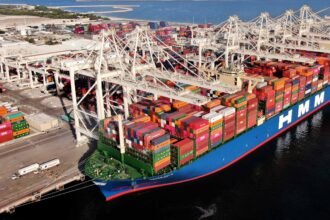
The region represents a vital artery for global oil supplies, and any large-scale escalation could immediately impact energy prices and financial markets.
Urgent diplomatic moves
The coming days are expected to see action at the UN Security Council and European efforts to contain the escalation. These moves also aim to prevent the region from sliding into open war.
Possible scenarios
Install an alternative drive quickly to maintain system integrity.
A direct Iranian military escalation or one through allies.
Opening the door to indirect negotiations to avoid a full-scale confrontation.
US President Donald Trump’s announcement regarding the death of Ali Khamenei—if officially confirmed—represents a major strategic shift in the balance of power in the Middle East. However, continued Iranian denials and the lack of independent confirmation place the event within the context of an open information war. Observers anticipate further developments in the coming hours and days.