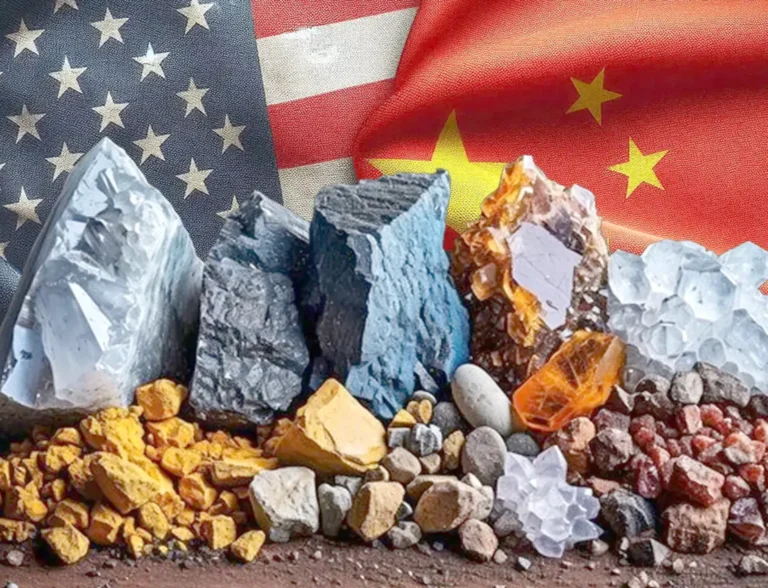
Beijing, China – The diplomatic dispute between Beijing and Tokyo has entered a “cold economic war” phase, with trade sources revealing that Chinese authorities have tightened inspection procedures for exports of rare earth minerals
and other strategic minerals destined for Japan since the beginning of January.
Strict monitoring and auditing of the “supply chain”
Chinese authorities have begun imposing additional restrictions beyond standard inspection procedures,
requiring exporters to submit detailed documentation
including “accurate and truthful” information about the Japanese importing companies.
This documentation must specify the final products that will incorporate these metals (such as electric vehicles and semiconductors)
and disclose whether the products manufactured in Japan will subsequently be exported to third countries, primarily the United States.
Taiwan: The straw that broke the camel’s back of cooperation
This economic escalation comes as a direct response to statements made by Japanese Prime Minister Sana Takaichi last November,
in which she hinted at the possibility of Japanese military intervention should Taiwan be attacked.
Beijing accuses Takaichi’s government of “reviving militarism,”
prompting China to leverage its influence in the rare earth metals market to pressure Tokyo.
Concern in the Japanese technology sector
Japan is critically dependent on Chinese supply, with imports from China
accounting for about 71.9% of Japan’s total rare earth mineral needs in 2024.
Japanese companies fear that the new bureaucracy could lead to deliberate delays
that might ultimately result in a “disguised halt” to supplies.
China classifies these metals on a list of 900 dual-use (civilian and military) commodities,
giving it legal cover to tighten controls under the guise of “national security.”
Despite assurances from the Chinese Ministry of Commerce that the measures will not affect “normal civilian trade,”
Japan’s electric vehicle and advanced weapons manufacturing sectors
are bracing for a supply crisis that could reshape trade alliances in East Asia.