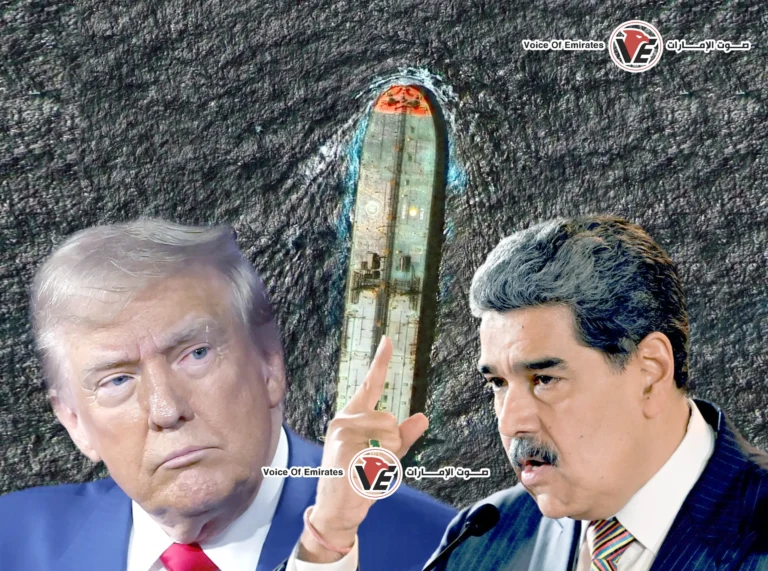
Washington, USA – The United States continues to escalate its field actions against the Venezuelan oil sector, after pursuing a third oil tanker near the Venezuelan coast.
This move comes as part of President Donald Trump’s tightening of the blockade
against the government of Nicolas Maduro, with the aim of strangling Caracas’s main source of revenue.
This puts Venezuelan oil exports in direct confrontation with strict US maritime surveillance.
The “Bella 1” interception
In detailing the incident, an informed source explained that the tanker named “Bella 1”,
which flies the Panamanian flag and is already subject to US sanctions,
was intercepted before loading the oil shipment.
Since US officials confirmed that the tanker was flying a “false flag”
and was subject to a court-ordered seizure, Washington deemed this action legal.
Especially since it suspects the transfer of oil belonging to the internationally
sanctioned state-owned company, “Petroleos de Venezuela”.
The risk of oil wells being shut down
On the other hand, the warnings were not limited to the government side, but the Venezuelan opposition warned of serious repercussions from this escalation.
Opposition leaders believe that continued disruption of exports will lead to storage tanks being filled within days;
Consequently, the national company will be forced to shut down production wells,
which could lead to a sharp decline in the economy, disruptions in the local currency, and difficulty in providing basic goods to the people.
Between accusations of “hacking” and surveillance capabilities
In a related context, Vice President and Oil Secretary Delcy Rodriguez condemned what she described as “American piracy.”
Deeming the seizure of the tankers an illegal act that violates international norms.
However, analysts in Washington and Houston believe that the continued interceptions,
which also included the tankers “Centuries” and “Skipper”,
This could reduce Venezuela’s exports to their lowest historical levels;
This is thanks to the significant development in US maritime surveillance capabilities.
Summary of the economic landscape and outcome
It appears that Washington is proceeding with its policy of “zeroing out” oil exports to Caracas.
Therefore, the international community is watching closely to see how these pressures will affect the stability of the region.
This is to ensure a balance between political sanctions and the growing humanitarian needs in Venezuela.
This is happening amid a clash of wills that does not appear to be ending anytime soon.