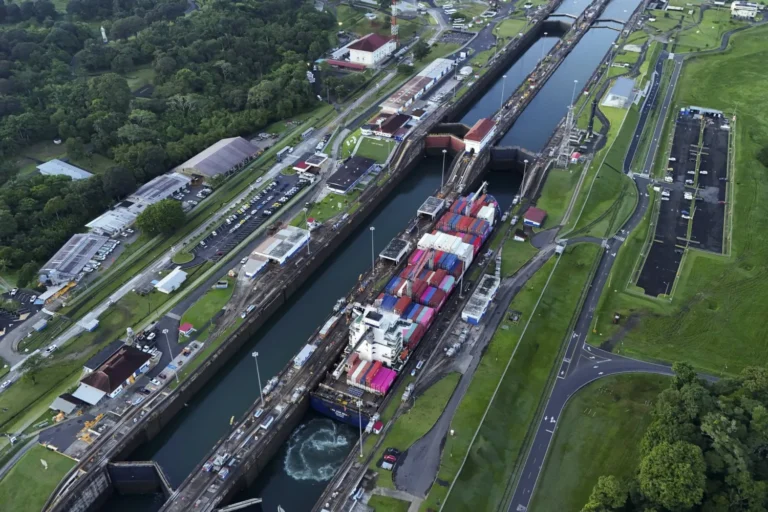
Panama City, Panama – The Panama Canal is moving to address the water shortage crisis threatening navigation through one of the world’s most important waterways with the Rio Indio infrastructure project. However, implementing the solution will take between five and six years, according to the Panama Canal Authority’s new director, Elia Espino de Marotta.
A reservoir that provides water for decades
Marotta said the completion of the Rio Indio project will allow the canal to operate without restrictions on shipping, even during droughts. She noted that the new reservoir aims to secure water supplies for approximately 50 years, in addition to meeting the needs of more than half of Panama’s population. The canal is facing increasing pressure due to declining water levels, amid concerns that the El Niño weather phenomenon will continue to affect rainfall patterns.
Concerns about new restrictions on ships
The director explained that the next three months—September, October, and November—will be crucial in determining the level of restrictions the canal may have to impose during the first quarter of next year. She added that insufficient rainfall could prompt authorities to reduce transit quotas or decrease the permissible draft for vessels. This might force some tankers to lighten their cargoes to ensure safe passage.
Fresh water is essential for the canal’s operation.
The Panama Canal differs from the Suez Canal in its reliance on fresh water to operate the locks that raise and lower ships during their journey between the Atlantic and Pacific Oceans through a waterway approximately 80 kilometers long. Currently, the canal depends on Lakes Gatun and Alajuela, which provide millions of liters of water during transits. Recently, the water shortage has led some ships to bid over a million dollars in auctions to secure transit slots. Meanwhile, the Panama Canal Authority has decided to postpone a planned reduction in the maximum permissible draft for ships. It is estimated that the canal handles approximately 3 to 5% of global maritime trade. Therefore, the water shortage directly impacts trade and international supply chains.