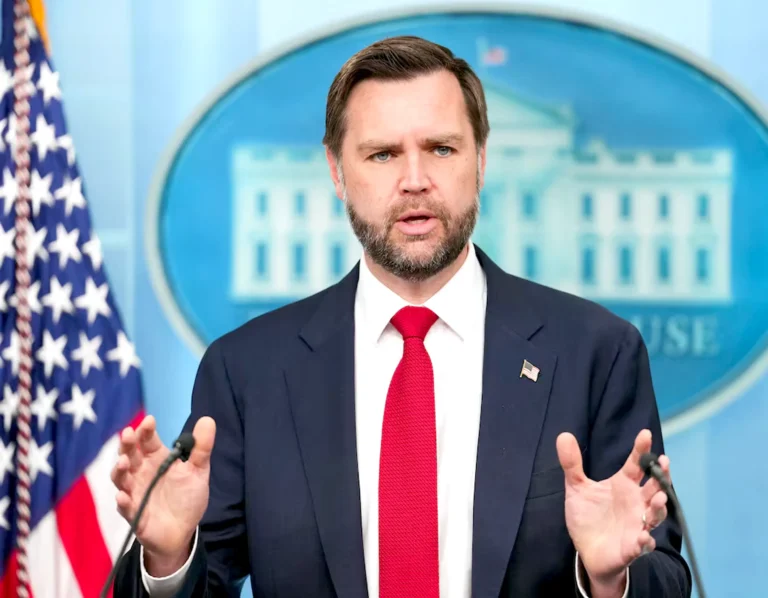
Washington, DC – US Vice President J.D. Vance warned of the dangers of relying on what he called “fragile” and “hostile” countries for vital supply chains.
He also hinted at offering incentives and investment rewards to companies
that choose to build their factories and establish their industries within the United States.
Industrial incentive and deterrence policy
Vance’s statements came during an event held in Washington, D.C.,
to mark the launch of the “Foundry School,” a specialized workforce development initiative.
This step comes at a time when the administration of President Donald Trump is intensifying its efforts to attract foreign investments.
It also aims to strengthen the local industrial base. This comes amid the escalation of economic
and strategic competition between Washington and Beijing.
Vance explained the administration’s position by saying: “The President demonstrated
our willingness to use carrots and sticks to tell our companies
and the countries of the world that every investment and construction
within the United States will be met with honor and true partnership with the government.”
On the other hand, he sent a decisive message to investors, saying:
“As much as you try to move American jobs abroad
and depend on hostile countries in our supply chains, you will not find
a friend in the President of the United States or any government policy that supports you.”
Industrial security and the “Pax Silica” initiative
The US Vice President emphasized that “industrial security is national security itself.”
He also noted that lessons learned over the past three decades have demonstrated
that the United States lack of self-sufficiency in the manufacturing sector
gives adversaries an opportunity to exploit weaknesses.
Consequently, it weakens the country’s geopolitical standing.
The Foundry School is part of a broader initiative known as Pax Silica.
This initiative aims to foster international cooperation in securing vital supply chains,
particularly in the artificial intelligence, biometallurgy, and other advanced industries.
The initiative also includes a network of US allies and strategic partners, most notably South Korea and Japan.