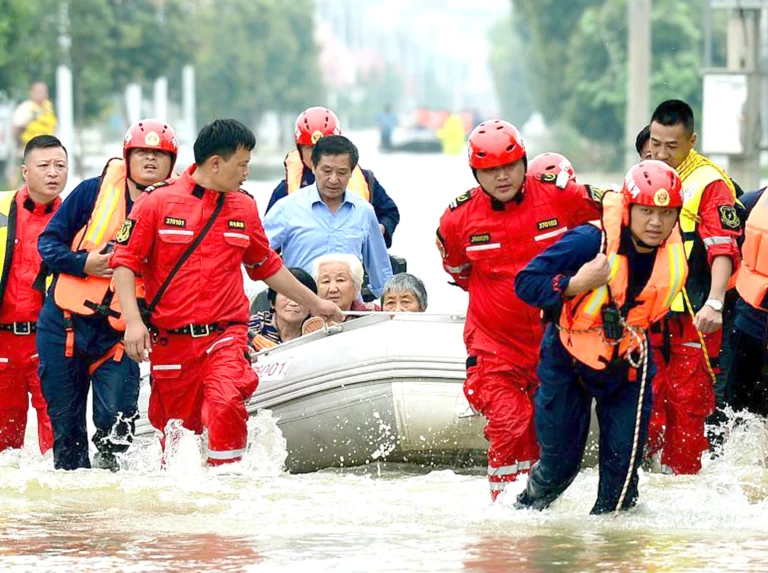
Beijing, China – China is experiencing a new wave of natural disasters. Violent storms, torrential rains, and flooding have killed at least 17 people and injured hundreds.
In addition, more than 130,000 people have been evacuated.
This is happening amidst widespread rescue operations and warnings of continued severe weather.
Human losses and large-scale evacuations
Chinese authorities announced that heavy rains and flooding caused by Typhoon Maysak have killed
at least six people in the southern region of Guangxi. Eleven others remain missing.
Emergency teams evacuated more than 130,000 people to safe areas,
after thousands of homes and large areas of agricultural land were damaged.
At the same time, rescue teams used rubber boats to remove the trapped residents.
Food, water, and temporary shelter centers were also provided to the displaced.
Hurricanes and floods hit several provinces
In Hubei province in central China, storms, strong winds,
and local tornadoes killed 11 people and injured 331 others. Nearly 5,000 homes suffered extensive damage,
including dozens that collapsed completely.
Authorities in Nanning raised the alert level to its highest point
after dams and water infrastructure came under significant strain.
Meanwhile, water levels in dozens of rivers exceeded official warning levels.
Warnings and repercussions of climate change continue
Chinese President Xi Jinping called for a comprehensive mobilization of all efforts in rescue and relief operations.
He also emphasized continued support for those affected and efforts to address the aftermath of the floods.
The Ministry of Water Resources also warned of continued heavy rainfall in the coming days in parts of Guangxi and Guangdong.
Meanwhile, Gansu Province witnessed a landslide that killed five people. Searches are still ongoing for missing persons.
Climate experts confirm that extreme weather events are becoming more frequent and intense as a result of climate change.
Meanwhile, China continues to boost its investments in renewable energy as part of its plan to achieve carbon neutrality by 2060.