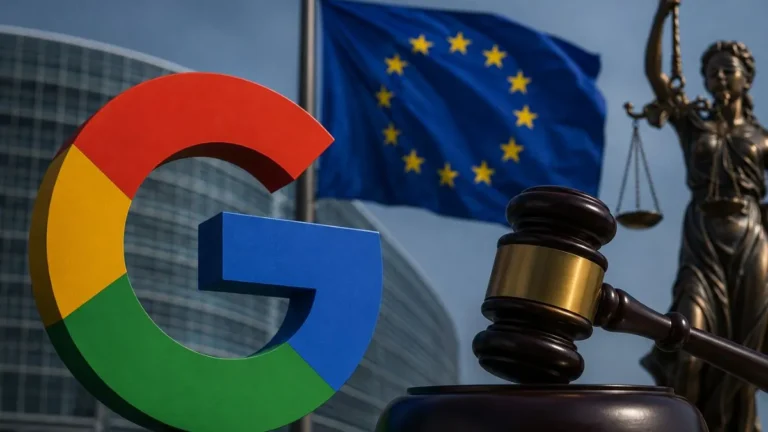
Luxembourg – In a decisive legal development that marks a milestone in regulating the tech sector, the European Union has resolved one of its longest and most complex legal battles with Google. The decision to impose a multi-billion euro fine is now final and enforceable, a move that strengthens Brussels’ authority in countering monopolistic practices and imposes stricter rules on tech giants in the Old Continent.
Roots of the Conflict: Accusations of Unfair Dominance
The roots of this case date back to years of investigations launched by the European Commission, which accused Google of exploiting its absolute dominance in the online search market to serve its own interests. European authorities concluded that the company provided its own shopping service, “Google Shopping,” with a strategic and preferential priority in search results while intentionally downgrading rival shopping services—an act deemed a clear violation of fair competition rules within the European Single Market.
The Financial Penalty and the Strength of the European Message
With the final judicial ruling issued, the fine of approximately €2.4 billion is now mandatory, marking one of the largest financial penalties in EU history against a tech company. The impact of the decision extends beyond the financial aspect, carrying a clear political message from Brussels affirming its strict adherence to policies ensuring fair competition and protecting the rights of consumers and competing businesses.
Clash of Narratives: Innovation vs. Monopoly
Throughout the years of litigation, Google defended its practices, arguing that the design of its search algorithms was primarily aimed at “improving user experience” and providing more useful and rapid results. However, the European courts remained unconvinced by these arguments and upheld the European Commission’s legal position, ruling that innovation should not be an excuse to harm other companies’ rights to fair and transparent access to digital markets.
A Legal Precedent and Future Impact
This ruling is seen as an important legal precedent that will change the rules of the game for “Big Tech” companies in their future dealings with European markets. Amid the EU’s move toward tightening oversight on digital platforms through new legislation targeting monopoly, this judgment confirms that a company’s global influence does not exempt it from compliance with European law, and that the era of practices harming free competition is over.