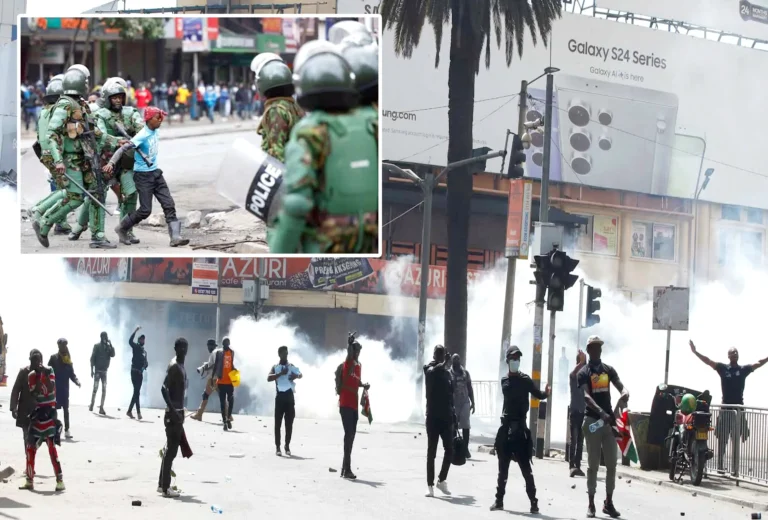
Nairobi, Kenya – Kenyan police used tear gas to disperse protesters in the capital, Nairobi, during events commemorating the second anniversary of the 2024 anti-government protests that left dozens dead
amid accusations that security forces used excessive force.
Widespread security deployment in the capital
Nairobi saw a heavy security presence as dozens of protesters took to the streets
to commemorate the victims of protests sparked by tax hikes and the rising cost of living.
Eyewitnesses reported that police used tear gas to disperse peaceful gatherings near the capital’s main police station.
They also arrested several people outside the parliament building as they attempted to lay flowers in remembrance of the victims.
Footage broadcast by local media also showed police using tear gas
in other areas on the outskirts of Nairobi, apparently to prevent further gatherings.
Store closures and stricter measures
Most shops and restaurants in the capital’s central business district closed their doors in anticipation of unrest,
while police set up roadblocks on several main streets. Water cannon trucks were also deployed.
Authorities also established a security cordon around the parliament building using barbed wire,
a move aimed at preventing a repeat of the scenes of the building being stormed during the 2014 protests.
Calls for an investigation into police performance
Opposition leaders joined the protest marches alongside families of those killed and injured during the 2024 unrest.
They demanded an independent and transparent investigation into the security forces’ handling of the demonstrators.
In response, the Kenyan Interior Minister affirmed that the police would deal firmly with any acts of rioting, vandalism,
or damage to public and private property. He emphasized that the law would be applied to anyone involved in public disorder.
Protest organizers are demanding that the government provide guarantees against the excessive use of force during demonstrations.
They are also calling for accountability for those responsible for abuses committed during previous protests.