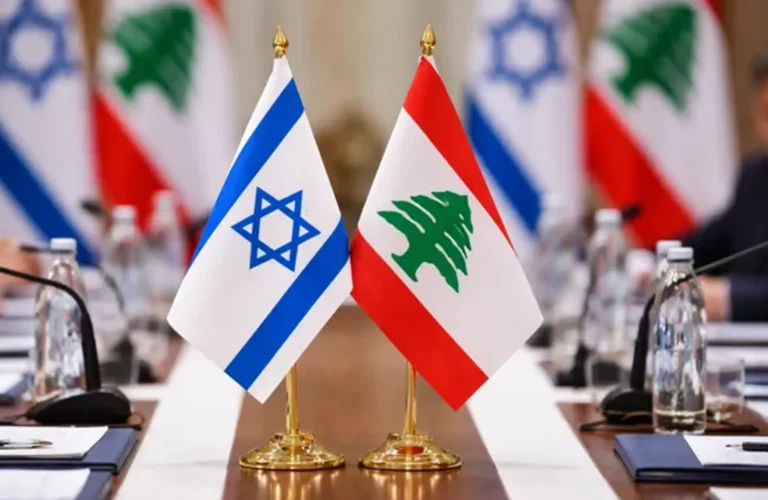
Washington, D.C. – The fifth round of negotiations between Lebanon and Israel has begun in Washington, D.C. This round includes two parallel tracks:
security and political. It comes as part of efforts to address outstanding issues between the two sides and reduce tensions along the border.
Talks include security and political issues
The negotiations address a range of issues related to the security situation on the Lebanese-Israeli border.
In addition, political matters are being discussed under international auspices and mediation.
This round of talks follows a series of previous meetings aimed at strengthening stability and preventing escalation in the region.
Officials and representatives from both sides are participating in the discussions, amid international interest in the outcomes.
The international community is also closely monitoring any understandings or practical steps that may emerge from these meetings in the coming period.
International efforts to support stability
The negotiations are supported and monitored by the United States and several international parties concerned with maintaining calm in the region.
These efforts come amidst the security and political challenges witnessed on the Lebanese-Israeli border in recent months.
The mediators hope that the current round will help bridge the gaps on a number of contentious issues.
They also hope that this will bolster stability and reduce the likelihood of escalation.
Stay tuned for the results of the new round
All eyes are on the outcome of the ongoing meetings in Washington,
especially as negotiations have entered a relatively advanced stage compared to previous rounds.
An assessment of the results of this round is expected in the coming days,
and the possibility of building upon them in subsequent negotiation tracks will be considered.
This round represents a new phase in an ongoing negotiation process
aimed at addressing the outstanding security and political issues between Lebanon and Israel.
These efforts come amidst international endeavors to maintain regional stability and prevent any further escalation in the region.