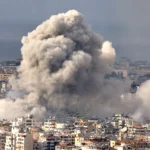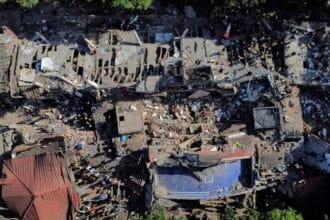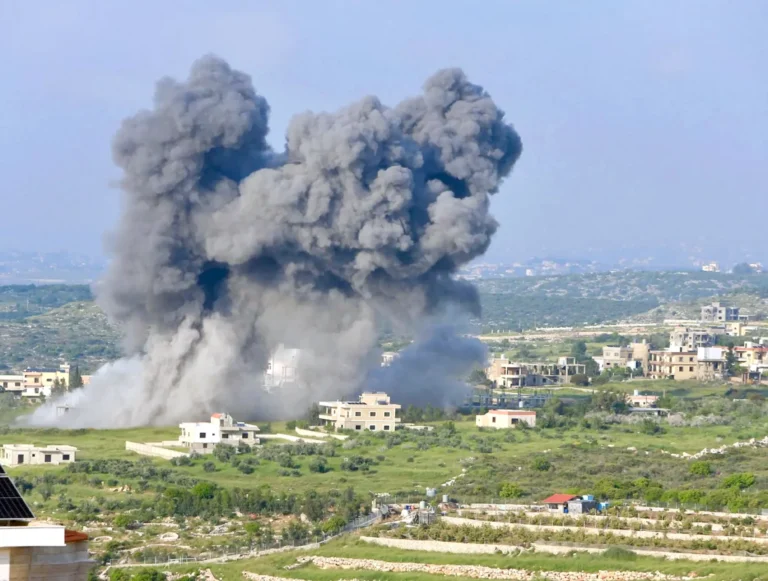
Beirut, Lebanon – Southern Lebanon witnessed renewed Israeli airstrikes targeting several border areas shortly after the ceasefire was announced.
This development raises questions about the future of the truce and the stability of the security situation in the region.
Airstrikes after the ceasefire announcement
Field reports indicate that Israeli aircraft carried out a series of airstrikes on targets in southern Lebanon,
despite the ceasefire agreement having taken effect.
This has led to an escalation of tensions along the southern border.
These strikes come as diplomatic, regional, and international efforts continue to solidify the truce.
Efforts are also underway to prevent the situation from spiraling into a new military confrontation that could threaten regional stability.
Fears of a new escalation
The continuation of military operations after the ceasefire announcement has raised concerns about
a possible resumption of hostilities, particularly given the sensitive security situation on the Lebanese-Israeli border.
Accusations continue to be exchanged between the parties regarding violations of previous agreements.
Observers believe that any new escalation on the ground could negatively impact political efforts aimed at strengthening stability.
They also believe it would hinder the creation of conditions conducive to restoring calm to the areas affected by the recent clashes.
Calls for adherence to the agreement
Conversely, international calls are growing for full adherence to the ceasefire
and for avoiding any steps that could undermine de-escalation efforts.
Emphasis is also being placed on the importance of addressing outstanding issues through diplomatic channels.
The international community is awaiting official reactions and developments on the ground in the coming hours,
hoping that the parties involved will be able to contain the tension and prevent further escalation.
This, in turn, would preserve regional stability and spare civilians the consequences of any renewed confrontation.