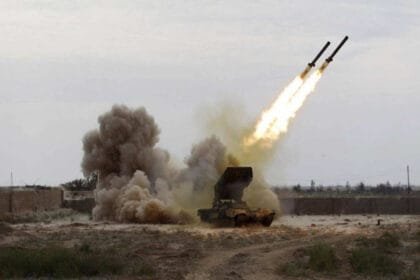
Taipei, Taiwan – The Taiwanese military fired rockets toward China from mobile rocket launchers using the well-known “hit-and-run” military tactic on Wednesday. This was part of a live-fire exercise simulating how to counter a potential Chinese invasion or military attack against the self-governing island.
“Hit and run”: US missiles deployed for the first time in the Strait of Hormuz
Although previous tests have been conducted on the advanced HIMARS missile system supplied to Taiwan by the United States, these live-fire exercises mark the first time Taiwan has directly launched missiles into the waters of the Taiwan Strait, which separates the island from mainland China. This move carries significant political and military implications.
Commenting on the exercise, Taiwanese Army Sergeant Wang Ming-hui stated, “Given the current and escalating threat from the enemy, we will continue intensive training on the HIMARS system with unwavering resolve to defend Taiwan’s territory as the strongest and most prepared force in the country.” The Taiwanese military clarified in an official statement that it used low-range training missiles during the drills. These missiles are designed to remain close to the Taiwanese coast before landing in the waters of the Taiwan Strait.
Chinese military pressure and the concept of a “rogue state”
These live-fire exercises come at a time of heightened tensions between the two sides, as China considers Taiwan a renegade province and an integral part of its territory. It repeatedly asserts that Taiwan must be brought under its control in the future, even if it requires the use of military force. Beijing translates this stance into action by sending warships and fighter jets into the island’s airspace and surrounding waters almost daily. Furthermore, it has conducted large-scale and intensive military drills that have encircled the island in recent years.
The American position: Arming the island and refusing to change the status quo by force.
For its part, the United States maintains a delicate diplomatic stance; it does not officially recognize Taiwan as an independent state. However, it strongly opposes any Chinese attempt to change the status quo by force. Washington also remains Taiwan’s primary arms supplier and main supporter, enabling it to defend itself and maintain the balance of power in the region.