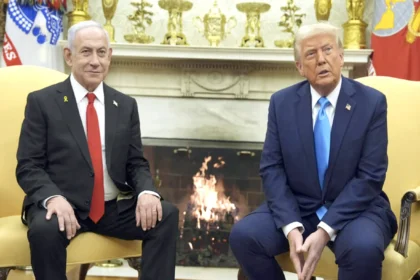
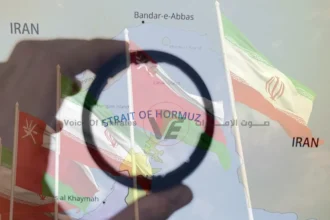
Washington, USA – In the context of intensive diplomatic efforts to contain the rapidly accelerating regional escalation. Media reports indicated that US President Donald Trump. Intends to contact Israeli Prime Minister Benjamin Netanyahu urgently. This move comes to urge Israel to refrain from any military response. This is in reaction to the recent Iranian missile attacks.
On the other hand, Trump sent a direct and concise message to Tehran. He said in statements to Fox News: “You have fired your missiles, and that is enough.” He added, calling on the Iranian side to return immediately to the negotiating table. Asserting that the goal is to reach a comprehensive and systematic agreement.
Trump’s Disappointment with the Field Path and Its Impact on the Agreement
In a related context, Trump expressed deep disappointment. The region was on the verge of a historic and imminent settlement. He stated: “Iran was very close to reaching an agreement.” He noted that signing was expected in the coming days. But the recent missile attacks completely changed the diplomatic path.
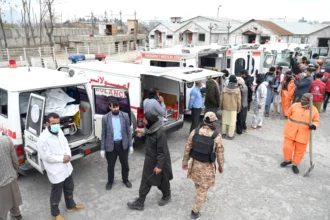
Furthermore, the region is experiencing unprecedented tension. These developments have pushed the US administration to take precautionary measures. The US military has been placed on “high alert.” Washington is currently working with its full diplomatic and military weight. To prevent the confrontations from sliding into a large-scale war.
International Anticipation and the Future of De-escalation in the Middle East
On another note, Washington confirms that the negotiation path is the solution. It is the only way to avoid consequences that could shake the stability of the Middle East. International circles are currently awaiting the results of American pressure. The extent of regional parties’ response to de-escalation calls is being examined. Especially in light of this complex and volatile field scene.
In conclusion, the question remains about the success of this pressure. Will Trump succeed in curbing the regional escalation at the last minute? All eyes remain fixed on Netanyahu’s and Tehran’s moves. Every field option today will determine the shape of the region’s near future.