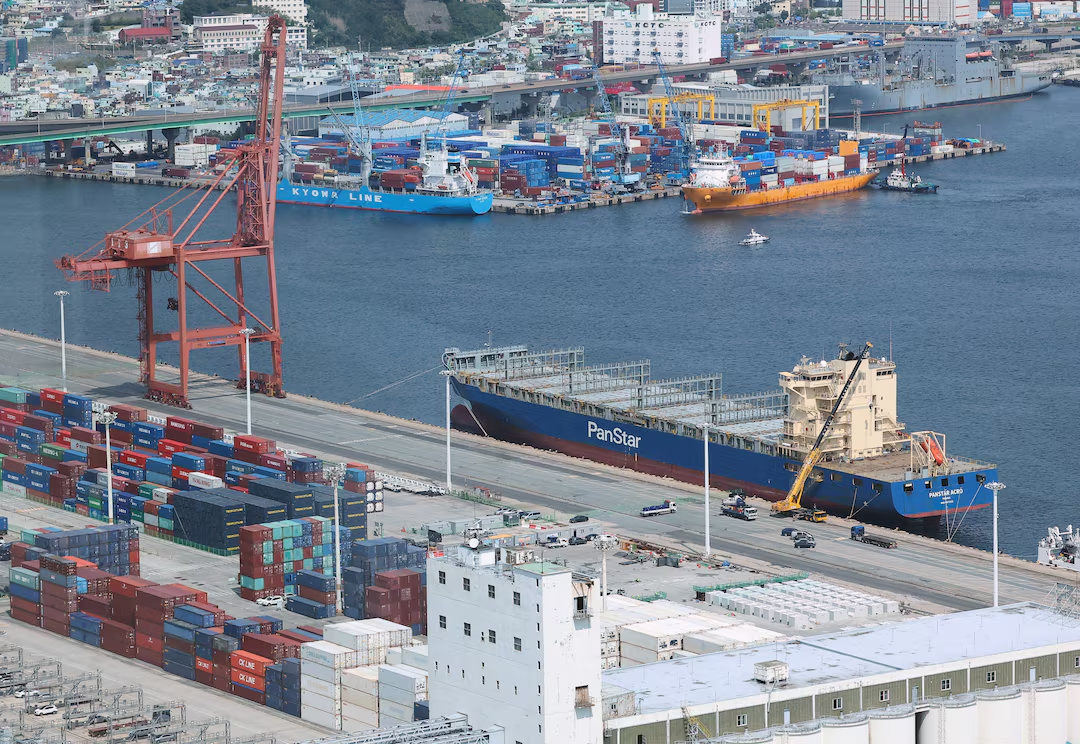
Dubai, UAE – Issa Kazem, Chairman of DP World, discussed with Qutayba Ahmed Badawi, Chairman of the General Authority of Ports and Customs in the Syrian Arab Republic, the latest developments in the implementation of the Tartous Port development project. This enhances its role as a strategic gateway for maritime trade, and a major supporter of economic recovery efforts and revitalizing trade activity in Syria.
During the meeting, opportunities to enhance the efficiency of infrastructure and logistics services were reviewed. This enhances the capacity of Tartous Port to keep pace with the expected growth in trade and shipping traffic. Establishing its position as a vital regional commercial center linking southern Europe, the Middle East and North Africa.
Implementation of the agreement
DP World’s plans to develop the port of Tartous are part of a 30-year concession agreement signed in July 2025 with the Syrian government. DB World is committed to investing $800 million to develop the port’s infrastructure. Expanding its capacity, modernizing cargo handling systems, and introducing advanced operational and digital solutions.
DP World places its capabilities and expertise at the heart of efforts to revive the maritime sector and the Syrian economy in general. By accelerating the implementation of plans to develop the port of Tartous to enhance its operational efficiency and its ability to handle multiple types of shipments. Including general cargo, containers, bulk cargo, and rolled cargo movement to support the expansion of Syria’s trade capabilities.
Developing the Syrian maritime sector
Issa Kazem said: “We at DP World Group are committed to making an effective contribution to developing the Syrian maritime sector by modernizing the port of Tartous in accordance with the highest international operational standards”. Our discussions focused on accelerating the implementation of the project, enhancing the port’s role in supporting trade, and linking Syria more closely to regional and global markets.
He added: “The redevelopment of Tartous Port represents a strategic step to restore vital trade corridors, stimulate economic activity, and raise the efficiency of operational operations. Which contributes to facilitating trade movement and supporting reconstruction and development efforts in Syria.
Logistics system
In turn, Radwan Sommer, Regional CEO and General Manager of DB World in the Indian subcontinent, Central Asia, the Levant and Egypt, said: “The development of Tartous Port represents an important milestone in the path of supporting economic recovery and strengthening commercial infrastructure in Syria”. We are proud to contribute to this vital stage.”
He added: “At DP World, we believe that sustainable infrastructure development is based on long-term partnerships and a future vision. Our partnership with the Syrian General Authority of Ports and Customs represents an important opportunity to reshape the future of trade in Syria and the region as a whole. And rebuilding a logistics system that supports economic growth in Syria.
vital location
The port of Tartous enjoys a vital geographical location on the Syrian coast overlooking the Mediterranean Sea. This makes it the second largest port in the country and a major sea gateway linking trade routes between Europe, the Levant and North Africa.
This strategic location significantly strengthens regional ties, complementing existing trade routes through the Bosphorus Strait and the Suez Canal.
In addition to the port itself, DP World is exploring opportunities to develop logistics zones, inland cargo hubs, and transit corridors in collaboration with local stakeholders. This is within the framework of a broader strategy to integrate the port of Tartous into regional and global supply chains.
With operations in more than 80 countries and handling approximately 10% of global container traffic, DP World has extensive experience in developing an extensive logistics infrastructure. The Tartous project is a valuable addition to the Group’s growing project portfolio in the Middle East, and reflects its focus on emerging trade corridors as engines of long-term growth.
It is noteworthy that trade relations between the United Arab Emirates and Syria are witnessing increasing growth. The volume of non-oil trade exchange between the two countries amounted to about 1.4 billion US dollars during 2025. Recording a record increase of 132.4% compared to the previous year, this exceptional growth reflects mutual trust and the common will to build a more interconnected and prosperous economic partnership.