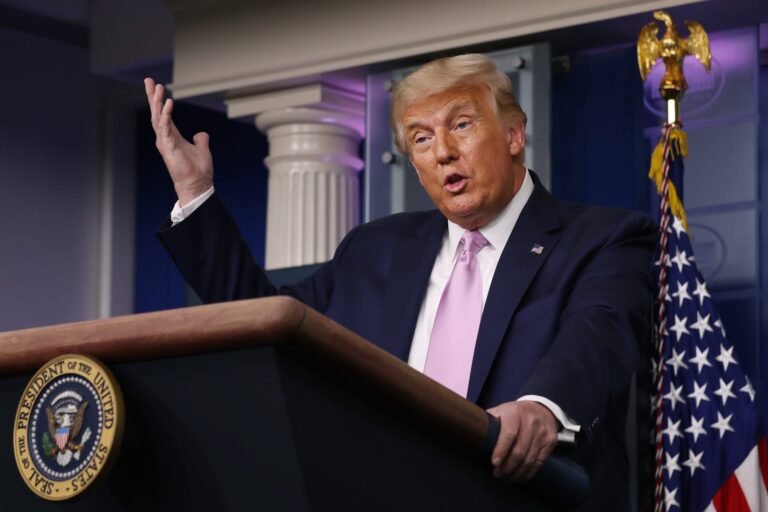
Washington – In an announcement marking the peak of diplomatic pressure, U.S. President Donald Trump confirmed that the United States has successfully and definitively prevented Iran from acquiring a nuclear weapon. Obviously, as of May 2026, Trump is employing the language of “decisiveness,” stating that Tehran has already agreed to strict commitments within a broader set of understandings. He emphasized that Iran possessing the bomb has become “impossible.” Despite his certain tone, Trump chose to keep the details and timing of these agreements confidential, raising questions about what Washington offered in exchange.
“Silent Pledges”: How Did Washington Impose New Limits Without a Formal Deal?
Trump clarified that recently followed policies have contributed to imposing a new reality on the Iranian nuclear program, noting that the understandings (the parties of which he did not specify) included explicit Iranian commitments not to pursue nuclear military capabilities. Accordingly, the White House believes this achievement is the cornerstone of regional security and energy market stability. Clearly, “secret diplomacy” played a pivotal role in reaching these results, away from the usual complexities of public negotiations.
“Cautious Anticipation”: Is the Iranian Nuclear File Effectively Closed?
Observers believe Trump’s statements set the stage for a new phase in the region, but one that requires “official confirmation” from other international parties and the IAEA. As a result, global capitals are in a state of anticipation for the disclosure of the implementation mechanisms and guarantees. In this landscape, Trump’s statement serves as a massive political and media “victory declaration,” while the Iranian nuclear file remains one of the most complex issues intertwined with major international interests.