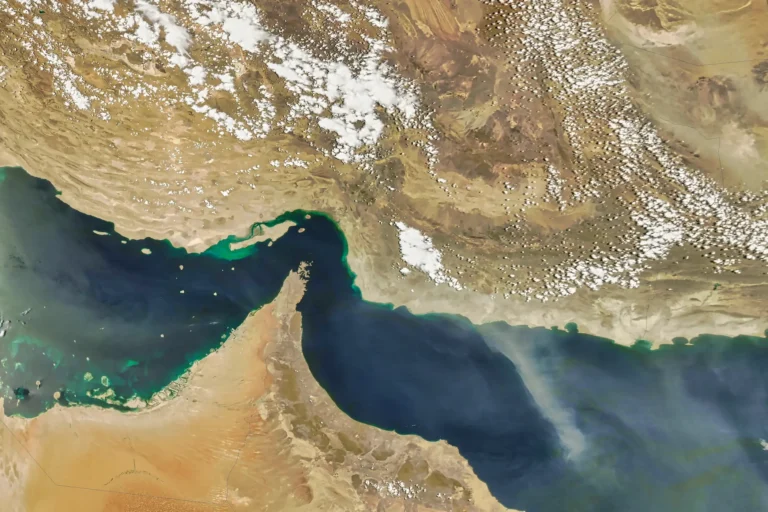
Washington/Tehran (Agencies) – The crisis in the Strait of Hormuz has reached a “brinkmanship” stage following the Central Bank of Iran’s announcement of collecting “transit fees” for ships crossing the strait, a move international powers view as a blatant violation of maritime laws. In a lightning response, US President Donald Trump issued direct orders to the US Navy to destroy any Iranian boat attempting to lay naval mines. Accordingly, the future of navigation in the Strait of Hormuz 2026 is a true test of might, as Washington shifts from deterrence to “direct military action” to clear the global shipping lane.
“Forced Fees” and Destruction Orders: How Did the Vital Passage Ignite?
Via his “Truth Social” platform, Trump warned in a stern tone: “There is no room for hesitation,” vowing to strike any boat, no matter how small, that threatens maritime safety with mines. Obviously, Tehran’s attempt to impose “de facto” sovereignty to collect hard currency has hit a solid US military wall. As a result, global oil markets are watching the Gulf with anxiety; with one-fifth of global consumption passing through the strait, any direct naval clash could trigger a localized surge in global energy prices.
Mine Warfare and Taxation: Will a Direct Clash Erupt in the Gulf?
Observers believe Tehran’s “transit fee” declaration is a desperate attempt to circumvent the financial blockade, but it has placed commercial vessels at the heart of a military conflict. Certainly, US presidential orders for “immediate fire” mean any Iranian attempt to intercept ships will be met with a crushing blow. Accordingly, the future of navigation in the Strait of Hormuz 2026 remains caught between the hammer of Iranian taxation and the anvil of American missiles, amid a total deadlock in all diplomatic tracks between the two nations.