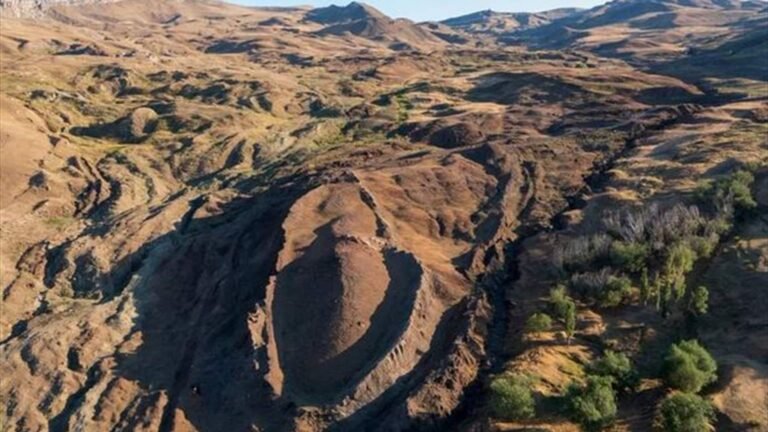
Ankara, Turkey – Recent scientific findings in Turkey have reopened the debate surrounding the location of “Noah’s Ark,” after researchers announced new evidence in an area near Mount Ararat that may be linked to historical and religious accounts of the Flood. The studies focused on a geological formation known as the Durupınar site, a landform extending approximately 160 meters and shaped like a boat. These characteristics prompted international scientific teams to conduct extensive field analyses over the past few years. According to the research results, soil and rock samples from the site showed the presence of marine sediments and the remains of microorganisms. This suggests that the area may have been submerged thousands of years ago. Furthermore, this timeframe coincides with estimates associated with the Flood narrative. Researchers also noted that the dimensions of the formation align with descriptions in some religious texts regarding the size of the ark. Consequently, this strengthens the hypothesis that archaeological remains may exist at the site, although conclusive physical evidence has not yet been found.
Conversely, several geology experts emphasized that these formations could be entirely natural, resulting from complex geological processes. Therefore, they stressed the need for deeper excavations and more precise studies before drawing any definitive conclusions. The Mount Ararat region is one of the most prominent sites that has attracted the attention of researchers and explorers for decades. In this context, the area has witnessed numerous scientific attempts to find evidence confirming the location of the ark, without yielding conclusive results to date. The scientific community awaits the results of future studies that may resolve the ongoing debate. Meanwhile, the site continues to attract global attention from researchers and those interested in history and archaeology.