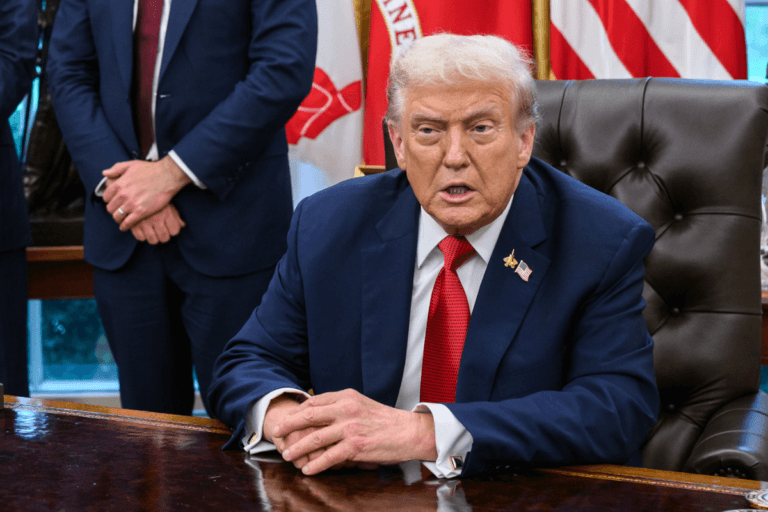
Washington – USA – Donald Trump announced that several friendly nations will soon participate in the naval blockade currently imposed on Iran. The US President confirmed that his country is moving forward in its efforts to impose more political and military pressures. Furthermore, he clearly indicated Washington’s intention to recover “nuclear dust one way or another” in early 2026. Accordingly, these statements reflect a US desire to tighten strict oversight over all Iranian nuclear activities. In this regard, Trump’s threats against Iran emerge as a primary headline for the next phase of US foreign policy.
Expanding the International Naval Alliance to Monitor Vital Corridors
Trump explained that the naval blockade will not be limited to unilateral US movements in the region. Obviously, Washington is working on building a broad international alliance aimed at accurately monitoring Iranian naval movements. As a result, other countries will join this alliance to limit Tehran’s capabilities, especially in vital maritime corridors like the Strait of Hormuz. In addition, the US administration seeks to secure international navigation from any potential threats that might hinder trade flow. However, observers believe that Trump’s threats against Iran might push the region toward unprecedented confrontation scenarios.
Escalation in the Nuclear File and Tightening Oversight on Iranian Activities
Trump indicated that the “nuclear dust” issue occupies the top of his current strategy’s priority list. Certainly, growing concerns regarding the development of Iranian nuclear activities push Washington to take decisive preventive measures. Accordingly, the President emphasized that the United States will do whatever is necessary to ensure international security is not threatened by this file. On the other hand, the term “recovering nuclear dust” represents a stern warning message to Tehran to immediately stop its nuclear ambitions. In the same context, the international community is monitoring the effects of Trump’s threats against Iran and their impact on arms control treaties.
Implications of Regional Tensions on Stability and International Navigation
Political experts believe that Trump’s recent statements may increase already burning regional tensions. For this reason, the chances of expanding military confrontation or tightening the economic blockade on Tehran are increasing. Furthermore, this escalation will directly affect Middle East stability and global oil shipping movements. Simultaneously, major capitals have begun assessing the risks of these statements on international supply chains. Ultimately, time will reveal the seriousness of implementing Trump’s threats against Iran and the new alliance’s ability to achieve its declared goals.