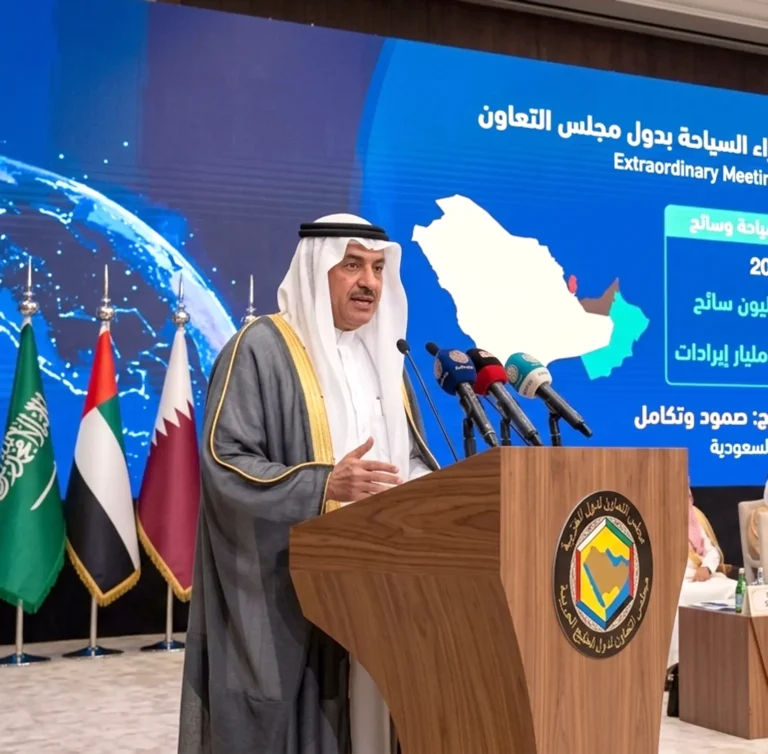
Riyadh, Voice of the Emirates – Amidst sharp geopolitical tensions in the region, the Secretary-General of the Gulf Cooperation Council (GCC), Jassem Mohammed Al-Budaiwi, clarified the situation during an extraordinary meeting of Gulf tourism ministers. He asserted that the current crisis is a “true test” of the GCC’s resilience and its ability to safeguard its economic achievements.
The escalation bill: Billions of dollars at stake
Al-Badawi’s statement was not merely a passing warning; it was based on alarming figures. After a golden year (2024) in which the GCC countries welcomed 72 million tourists with revenues approaching $120 billion, this growth is now threatened by a “forced hemorrhage.” Current estimates indicate a potential loss of between 8 and 19 million tourists. This could translate into a financial deficit ranging from $13 billion to $32 billion, resulting from the natural decline in travel. This comes amidst the instability of markets linked to the tourism sector.
From coordination to “practical integration”: A new roadmap
Al-Badawi stressed that the current phase does not allow for “traditional coordination,” but rather requires a radical shift towards effective field integration. The Council’s vision for the next phase can be summarized in the following key points:
Overcoming crises through interdependence: Relying on the shared strategic depth among member states.
Unifying the media discourse: Adopting a unified media message that addresses the world with confidence.
Establishing the “safe destination”: Emphasizing, through practical initiatives, that the Gulf states remain the most attractive and secure haven for global tourism, despite the turmoil of regional crises.
A message of trust
Al-Badawi concluded with a clear call for proactive and flexible action. He also emphasized that protecting the “gains of the Gulf peoples” requires consistent performance and efficient crisis management to ensure the sustainability of the tourism sector as a key pillar of the national economy, insulated from political fluctuations.