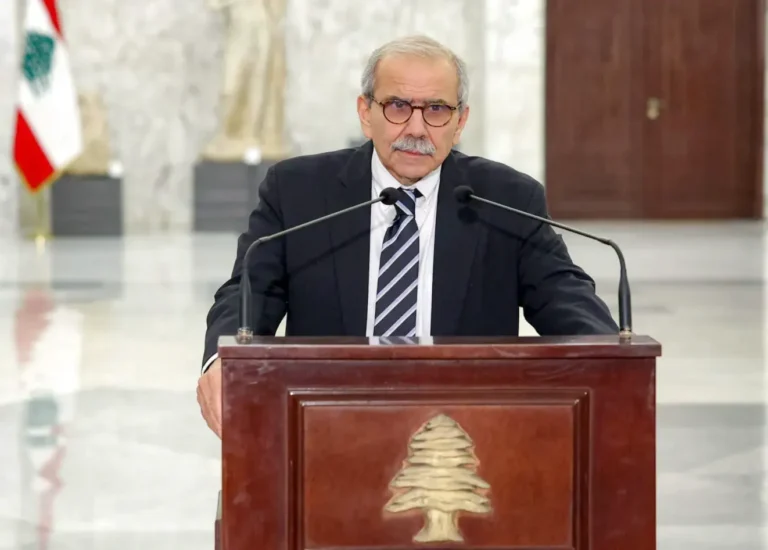
Beirut, Lebanon – In remarks reflecting the critical juncture Lebanon is currently facing, Lebanese Prime Minister Nawaf Salam reaffirmed the government’s firm stance on the political and military developments. He emphasized that “no one in Lebanon will accept peace on Israeli terms.” Salam clarified that a genuine and lasting peace cannot be separated from the complex regional context.
Diplomatic efforts and a clash with reality
In an interview with the local newspaper L’Orient-Le Jour, Salam revealed the extent of the pressure and efforts exerted by the Lebanese government to avert a slide into all-out war. He stated, “Not a day goes by without an attempt to mobilize the efforts of Arab and European countries, as well as the United States, to stop this war.”
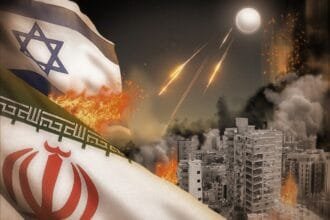
Salam attributed the setbacks in these efforts to structural factors. He also described the current conflict as “organically linked to the Israeli-American conflict with the Iranian regime.” He further noted frankly that some partners, particularly Arab states, prioritize their own interests and concerns in this conflict. Consequently, this complicates the formation of a unified front to pressure for a ceasefire.
48-hour pledges and missing guarantees
The Prime Minister spoke about the behind-the-scenes communications that preceded the escalation. He confirmed that the state had received assurances from Hezbollah that it would not intervene. In return, Israel made pledges through intermediaries not to launch operations against Lebanon. However, he explained that, as he put it, “these pledges did not last more than 48 hours.”
Regarding current international guarantees, Salam made a worrying statement. He indicated that the only tangible guarantees so far pertain solely to sparing Beirut International Airport and the road leading to it from bombing. Meanwhile, all other issues remain vulnerable to further escalation on the ground.
The party’s weapons and direct negotiations
Regarding the proposed initiatives, Salam explained that there are “French ideas” on the table. However, these have not yet reached the level of a “comprehensive initiative.” On the issue of linking a ceasefire to Hezbollah’s disarmament, Salam was clear in separating the two tracks. He emphasized that “disarmament is a long process, while a ceasefire must be immediate.”
Concerning the future of Hezbollah as a political entity, Salam stressed that the problem lies in its military and security activities, which “can no longer be tolerated.” He clarified that the state does not object to the party’s existence as a political force in parliament and municipalities. However, this is only if it fully transitions to civilian activity.
Readiness for negotiation and state credibility
In conclusion, Salam reiterated the government’s readiness to resume negotiations within a civilian framework and under international auspices. He also affirmed Lebanon’s openness to discussing any agenda or formula that guarantees its rights.
In conclusion, Salam reiterated the government’s readiness to resume negotiations within a civilian framework and under international auspices. He also affirmed Lebanon’s openness to discussing any agenda or formula that guarantees its rights. And he strongly refuted the questioning of the credibility of government decisions resulting from the military operations south of the Litani River. He emphasized that the government remains steadfast in its decisions. Furthermore, it has already begun implementing its plans on the ground, despite the challenges.