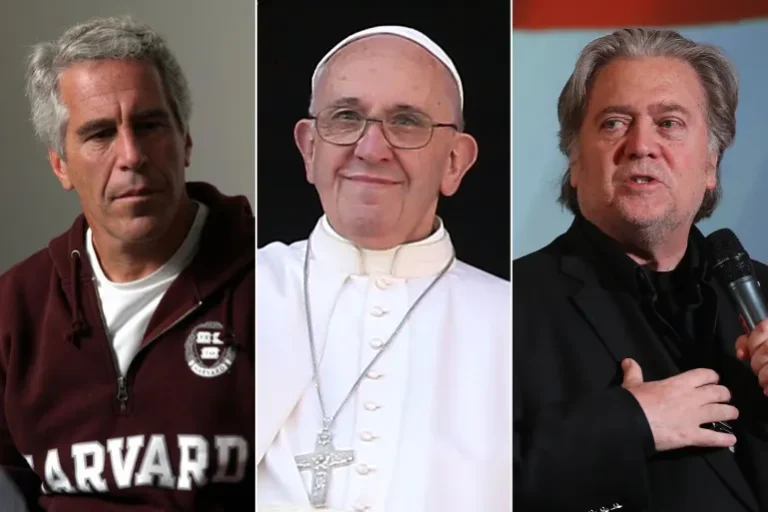
Washington, DC – Media reports have sparked widespread controversy following allegations that a former advisor to US President Donald Trump attempted to cultivate relationships with the late financier Jeffrey Epstein as part of a series of questionable activities. These activities were reportedly aimed at influencing the Vatican and effecting changes within religious and political power circles.
According to the reports, the former advisor sought to build a network of relationships with influential figures to exert pressure or indirectly influence sensitive matters within the Catholic Church. This has raised questions about the true motives behind these actions and whether they are part of a broader power struggle between political and religious factions.
Informed sources indicated that the name of Jeffrey Epstein, whose legal troubles have sparked global scandals, has resurfaced due to his extensive connections with prominent political and economic figures. Consequently, any association with his name now attracts significant media attention and raises numerous questions.
These allegations coincide with leaks and circulating documents suggesting attempts to influence power dynamics within the Vatican, though the full details remain controversial. No official confirmations have been issued by the relevant authorities regarding the veracity or actual scope of these claims.
Observers believe this case reflects the intertwining of politics and religion in certain sensitive matters. In this context, international networks of influence can play undisclosed roles in shaping the landscape, particularly amidst the ideological conflicts unfolding on the global stage.
The renewed discussion of these allegations comes at a time of growing debate in the US and Europe regarding the role of lobbying groups and personal connections in decision-making. This, in turn, brings back into focus the issue of hidden influence and its impact on major institutions.