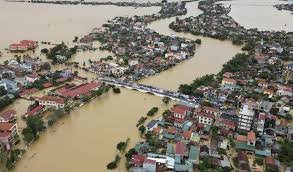
Vietnam is experiencing a worsening humanitarian and environmental tragedy. The Vietnamese Ministry of Environment announced today that the devastating floods that swept through the country have claimed the lives of at least 55 people in less than a week. The fate of 13 others remains unknown, amidst widespread destruction of infrastructure and tourist attractions.
Dak Lak is at the heart of the disaster, with residents taking refuge in trees. According to official reports, the deaths since last Sunday have been concentrated in six provinces in the southern and central parts of the country. Dak Lak province was the hardest hit, recording more than 20 victims. State media painted dramatic pictures of the rescue operations. Trapped residents were forced to climb onto rooftops or cling to trees to escape the raging waters, while rescue teams continued their efforts to reach those stranded.
Complete darkness and blocked roads persist despite the receding waters. Although water levels have begun to recede somewhat today, the repercussions continue. The Ministry of Environment indicated that:
Many main roads remain impassable, hindering the delivery of aid.
Around 300,000 people are living in complete darkness as a result of the power outage.
The floods spared neither historical sites nor tourist destinations, which were submerged in water, threatening the tourism sector with further losses.
A hefty toll of natural disasters is expected in 2024, and these floods cap off a disastrous year for Vietnam. According to official statistics for the period between January and October:
The number of dead and missing as a result of natural disasters has reached 279 people.
The financial losses exceeded the two billion dollar mark.
The fingerprints of global warming are clearly visible. While Vietnam is accustomed to heavy rains between June and September, the continuation of such intense rainfall into late October and November is alarming scientists. Experts attribute these extreme phenomena to global warming caused by human activity. This has made such weather events more frequent and destructive, explaining the significant increase in the number of victims and the scale of the damage.