Caracas, Venezuela – The name Venezuela is linked to one of the most famous European voyages of exploration to the New World. Its origins lie in the sights European sailors witnessed on its northern coast.
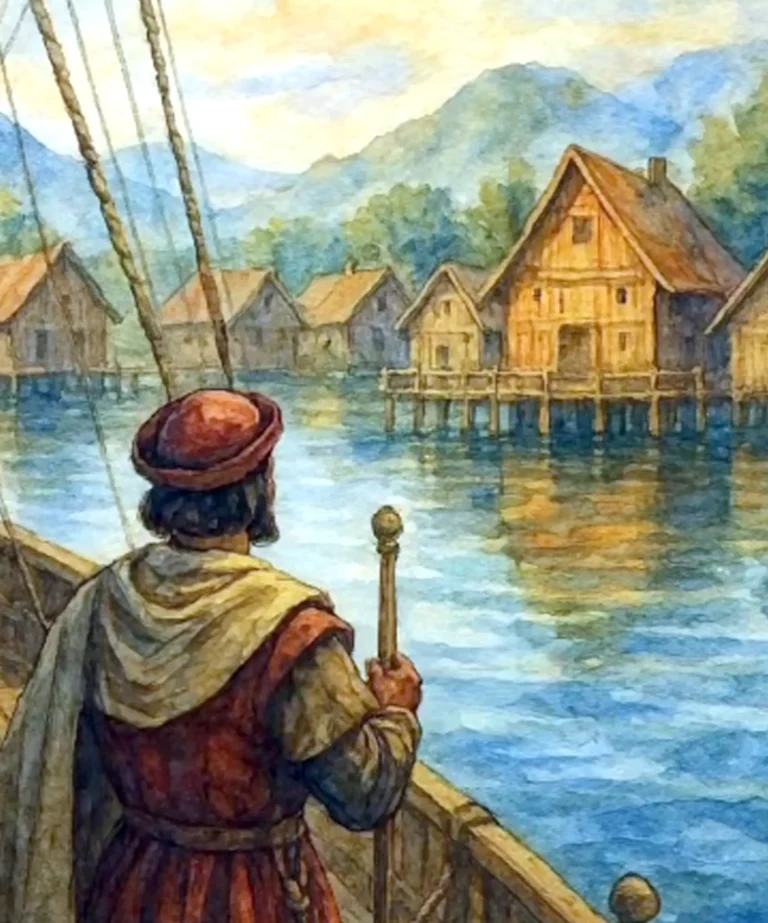
There, the villages built on wooden stilts in the water inspired them to give the country a name that remains with it to this day.
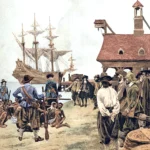
The story began during the third voyage of the Italian explorer Christopher Columbus in 1498.
At that time, he reached the northern coast of South America and saw for the first time the lands that are now Venezuela.
Although he realized he had arrived on a vast expanse of land, he did not realize it was part of a new continent.
He continued to believe he was approaching the edge of Asia.
Alonso de Ojeda’s expedition
Just a year later, the Spanish explorer Alonso de Ojeda set sail on an expedition,
accompanied by the Italian navigator Amerigo Vespucci.
While exploring the Maracaibo Lake region, they saw villages built
by the indigenous people on wooden stilts driven into the water, a sight that reminded Vespucci of Venice.
From this experience, the explorers named the area “Venezuela,” a Spanish word meaning “Little Venice,” referring to the similarity
between the houses built over the water in Maracaibo Lake and the famous canal buildings of Venice.
Simon Bolivar led the liberation movement
As Spanish influence expanded in the region, the name came to encompass the entire territory.
This territory later became one of Spain’s most important colonies in South America.
Subsequently, the historical leader Simón Bolívar led the liberation movement
from Spanish colonialism in the early 19th century, and Venezuela gained its independence in 1821.
Today, Venezuela boasts remarkable natural diversity, encompassing Caribbean beaches, mountain ranges, and tropical rainforests.
It is also home to Angel Falls, the world’s highest waterfall,
and possesses one of the world’s largest proven oil reserves.
More than five centuries after Europeans first reached its shores, the story of Venezuela name continues
to recount how a simple observation of floating villages became the name of an entire nation.
It also stands as a testament to one of the most significant voyages of exploration in history.