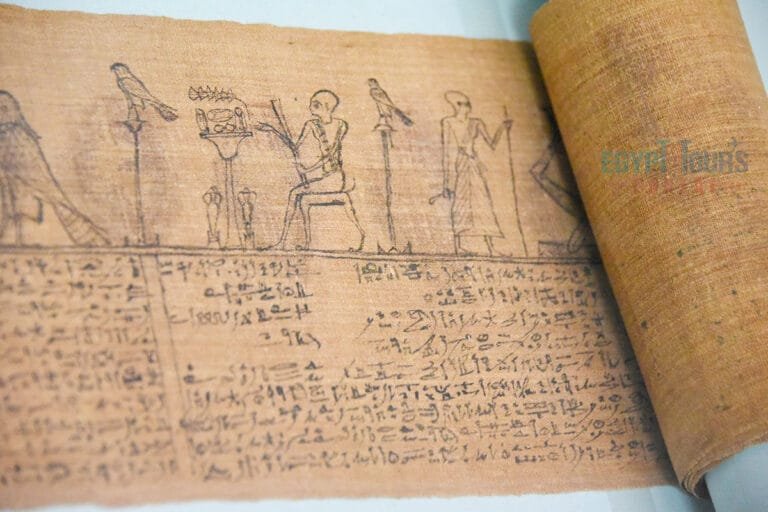
Egyptian museums house a rare and precious collection of the oldest Pharaonic papyri, representing a comprehensive historical record that documents multiple aspects of the lives of ancient Egyptians. These papyri span various fields, including administration, economics, medicine, religion, and literature, remaining a living testament to one of the greatest civilizations in human history.
Advanced Administrative and Economic Organization
These papyri reveal the advanced level the ancient Egyptian state reached in organizing its affairs and managing its resources. They include precise tax records, detailed lists of workers and their wages, and rigorous administrative documents, in addition to religious texts, literary works, and medical prescriptions. This provides researchers and Egyptologists with a unique window to understand the intricacies of daily life thousands of years ago.
Wadi al-Jarf Papyrus: Secrets of the Great Pyramid
Among the most prominent of these historical treasures is the “Wadi al-Jarf Papyrus,” considered one of the oldest discovered papyri in the world to date. Dating back to the reign of King Khufu, this papyrus meticulously documents the transportation of massive stones used in the construction of the Great Pyramid. It also provides unprecedented detailed information regarding work methods, management systems, and logistics employed during the pyramid-building era.
Timeless Contributions to Medicine and Literature
Alongside administrative documents, Egyptian museums preserve a number of renowned scientific and cultural papyri. These include the medical “Ebers Papyrus,” which reveals the sophistication and ingenuity of Pharaonic medicine in diagnosing and treating diseases, and the “Papyrus of Ani,” which contains beautifully illustrated chapters from the “Book of the Dead.” Furthermore, other papyri record economic transactions and legal contracts, clearly reflecting the deeply rooted scientific and cultural progress of ancient Egyptian civilization.
Documents Redrawing the Features of History
Archaeologists emphasize that these papyri are not merely rare artifacts for museum display; they are invaluable historical documents that actively contribute to redrawing the features of ancient Egyptian society. These records also highlight the genius of the ancient Egyptians in the fields of administration, science, and the invention of writing, standing as a witness to an extraordinary cultural legacy that continues to captivate the world’s interest to this day.