
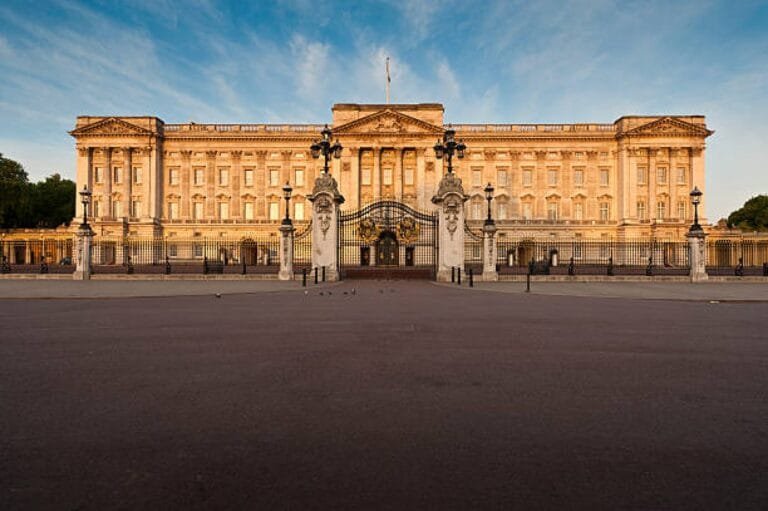
Buckingham Palace is one of the most famous royal palaces in the world and a prominent symbol of the United Kingdom. It is not merely a historic building; it serves as the official London residence of the British monarchs and the stage for the most significant official events and celebrations, as well as a diplomatic hub for welcoming heads of state and high-ranking foreign delegations.
From “Buckingham House” to Official Residence
The origins of the palace date back to 1703, when it was built as a private home named “Buckingham House” for the Duke of Buckingham. In 1761, King George III purchased it as a private residence for his wife, Queen Charlotte, marking the beginning of a new chapter in the building’s history as it transitioned from a private home to a prestigious royal palace.
Architectural Evolution and Expansion
During the reign of King George IV, the building underwent extensive expansion and remodeling overseen by the renowned architect John Nash. This was followed by a series of ongoing development works that gave the palace its current architectural character and the stature befitting the British Royal Family, blending historical heritage with royal architectural grandeur.
The Heart of the Royal Family and Center for Ceremonies
In 1837, Queen Victoria made Buckingham Palace her official residence upon her accession to the throne, and it has since become the main hub for the British Royal Family. Today, the palace encompasses approximately 775 rooms, including state ballrooms, opulent reception rooms, royal suites, and administrative offices, in addition to vast gardens—some of the largest private gardens in London—and a historical art collection considered among the most valuable assets of the British Crown.
A Historical Landmark and Tourist Destination
Over more than three centuries, Buckingham Palace has been a witness to major historical milestones. Its famous balcony has gained symbolic significance in British heritage; it is the platform from which the Royal Family appears during national occasions before crowds of citizens. Today, the palace continues to attract millions of visitors annually, eager to explore its storied past and witness the Changing of the Guard ceremony and royal traditions that embody the continuity of the British monarchy.