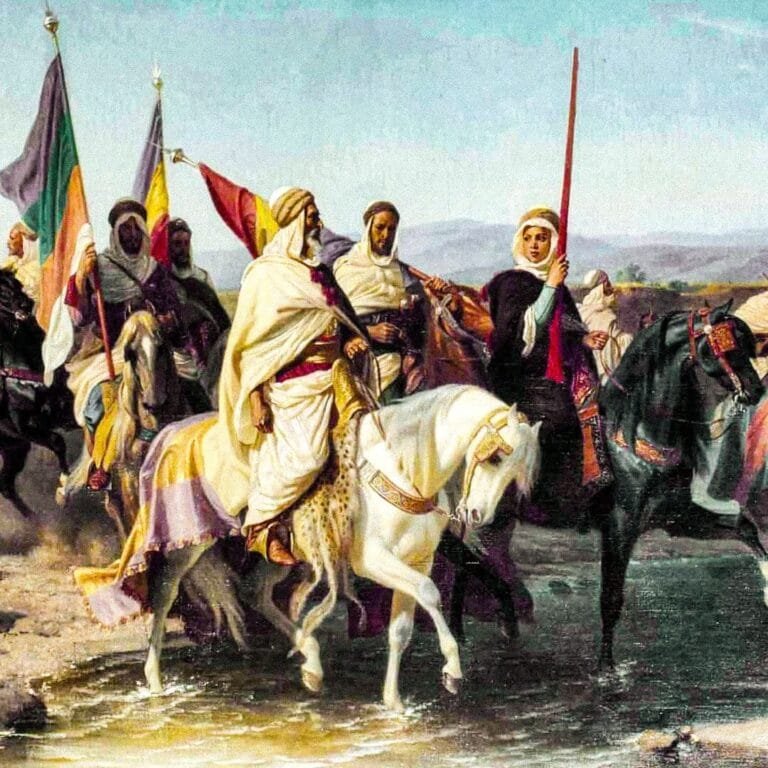
Lalla Fatma N’Soumer is considered one of the most prominent symbols of popular resistance in the history of Algeria. She led fierce battles against the French occupation forces in the mid-nineteenth century. As a result, she became an immortal symbol of national struggle and courage. She was also a woman who struck fear into the ranks of the French army for many years, thanks to her military acumen and leadership influence.
A Religious Upbringing and Exceptional Military Leadership
Lalla Fatma N’Soumer was born in eighteen thirty in the Kabylia region. She grew up in an authentic religious and scholarly environment. With the beginning of the French incursion into Algerian territories, she joined the ranks of the popular resistance. Thanks to her leadership personality and profound wisdom, she was able to unite the tribes and rally fighters to defend their lands against the colonial forces. Moreover, she overcame the traditions that confined military leadership to men during that historical era.
Hit-and-Run Strategy and Immortal Battles
N’Soumer led several prominent historical battles, the most famous of which were the battles of Tachkkirt and Icheriden. In those battles, she inflicted heavy losses on the French forces. The resistance under her leadership relied on the optimal exploitation of their knowledge of the rugged terrain of the Kabylia mountains. In addition, they implemented military hit-and-run tactics. This tactical approach complicated the mission for the French army and prolonged the confrontations. Consequently, occupation leaders classified her as one of the most dangerous resistance leaders in Algeria. This turned her into a renewed source of inspiration for fighters and a symbol of legendary steadfastness.
Captivity and Immortality in the National Memory
In eighteen fifty-seven, after a massive French military campaign, Lalla Fatma N’Soumer was captured, and she was placed under house arrest until her death in eighteen sixty-three. Despite her imprisonment, her spiritual and militant influence did not end, as her biography remained alive in the Algerian national memory as one of the most prominent heroines of the anti-colonial struggle. Today, N’Soumer holds a high status in the hearts of Algerians. Educational and cultural institutions, streets, and public squares are adorned with her name. Additionally, her heroic deeds are recounted in school curricula and literary works as a living model of the Arab woman who wrote a glorious history of courage and sacrifice for the freedom of her homeland.