Vatican City – The “Raphael Loggia,” one of the most unique artistic masterpieces within the Apostolic Palace in the Vatican, is undergoing a comprehensive restoration process aimed at preserving its great historical and artistic value. This initiative comes nearly 500 years after its completion, as part of ongoing efforts to safeguard the immortal human heritage that the great masters of the Italian Renaissance left to the world.
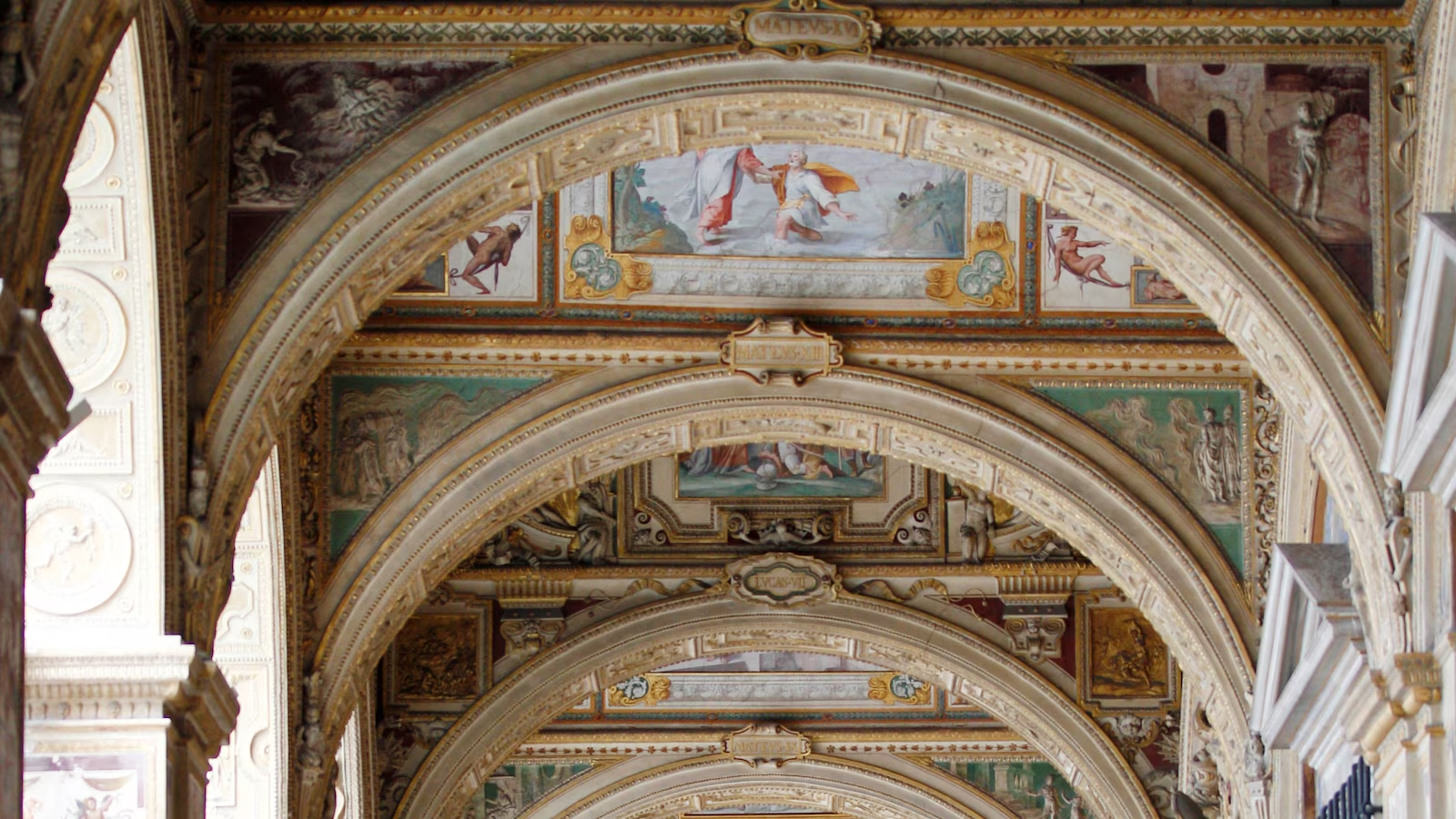
The Loggia is one of the most famous works associated with the genius Italian artist Raphael Sanzio, who was commissioned by Pope Leo X in the early 16th century to design and decorate the open corridors of the Apostolic Palace. Raphael succeeded in creating an exceptional work of art that skillfully blended architecture, painting, and ornamentation, making it one of the most prominent and attractive landmarks of the Vatican.
Raphael’s Genius and Motifs Inspired by History
The Loggia is adorned with dozens of frescoes inspired by events from the Bible, alongside delicate floral and geometric motifs inspired by ancient Roman art. These artistic characteristics gave it a special place among the masterpieces of European art, leading art historians to call it the “Pictorial Gospel of Raphael” due to its visual and narrative richness.
Although Raphael passed away in 1520 before the project was completed, his students continued to execute his original designs under the careful supervision of his artistic school, maintaining the aesthetic vision that characterized his works throughout his life. Thanks to this, the Loggia turned into a prominent model of Renaissance art that combined infinite artistic precision with deep religious symbolism.
Modern Techniques to Preserve Cultural Heritage
Current restoration work focuses on removing the traces of time that have accumulated on the walls and ceilings over the centuries, treating fine cracks, and stabilizing the original paint layers using modern scientific techniques that ensure the historical features of the work are preserved without affecting its original components.
Maintenance operations also include precise digital documentation of every part of the Loggia, allowing researchers to study its artistic details and providing a reference database that will assist in future conservation work, while ensuring the sustainability of this cultural heritage for future generations.
The Raphael Loggia is considered one of the most important visitor destinations within the Vatican Museums, attracting millions of visitors and researchers from all over the world annually. It represents the pinnacle of the creativity witnessed by Europe during the Renaissance, and remains a living witness to Raphael’s genius and contributions that still fascinate humanity to this day.