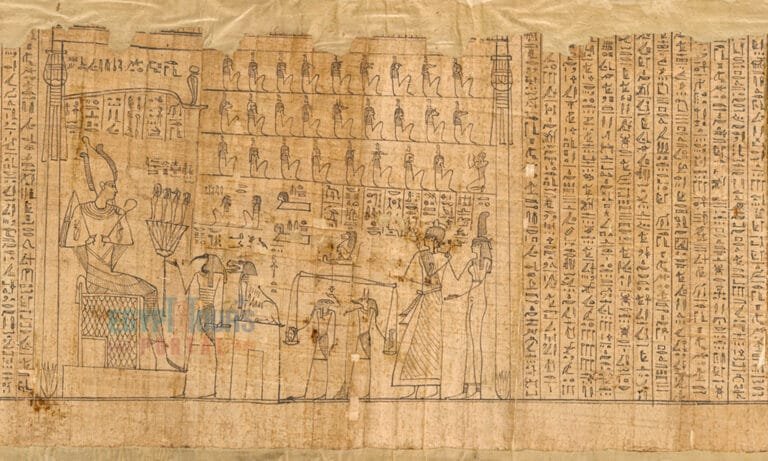
Cairo, Egypt – What is known as the “Book of the Dead” was one of the most prominent funerary texts in ancient Egyptian civilization, though it was not a holy book in the traditional sense.
Rather, it was a collection of spells, prayers, and instructions that ancient Egyptians believed would help the deceased navigate the journey of the afterlife and reach eternal life.
The origins of these texts date back to the New Kingdom, where they were written on papyrus scrolls and placed inside tombs next to the deceased.
Some chapters of these texts were also carved onto tomb walls and coffins, with content varying from one person to another based on social status and material resources, as there was no fixed or unified version.
Secrets of crossing the afterlife and the weighing of the heart scene
The book includes dozens of chapters detailing how to overcome obstacles in the afterlife, interact with the gods, and ensure arrival at the eternal world.
Among the most prominent contents of the book is the famous “Weighing of the Heart” scene before the god Osiris, which reflects the essence of the moral doctrine of the ancient Egyptian.
It was believed that a person’s heart would be weighed against the feather of “Maat,” the symbol of truth and justice, to determine their fate in the afterlife based on their deeds in life.
This scene highlights the extent to which ancient Egyptian civilization was concerned with values, ethics, and justice, considering them a fundamental standard for immortality and resurrection.
The truth about the name and the spiritual dimension of the text
Archaeologists believe that the name “Book of the Dead” was coined by Western researchers in the modern era, while ancient Egyptians called it the “Book of Going Forth by Day.”
This name carries a deep spiritual significance, as it refers to the journey of resurrection and rebirth after death, and the liberation from the darkness of the grave to the light of eternal life.
This text remains one of the most important sources that revealed much about the ancient Egyptians’ religious and funerary beliefs, and contributed to understanding their perspective on life, death, and immortality.