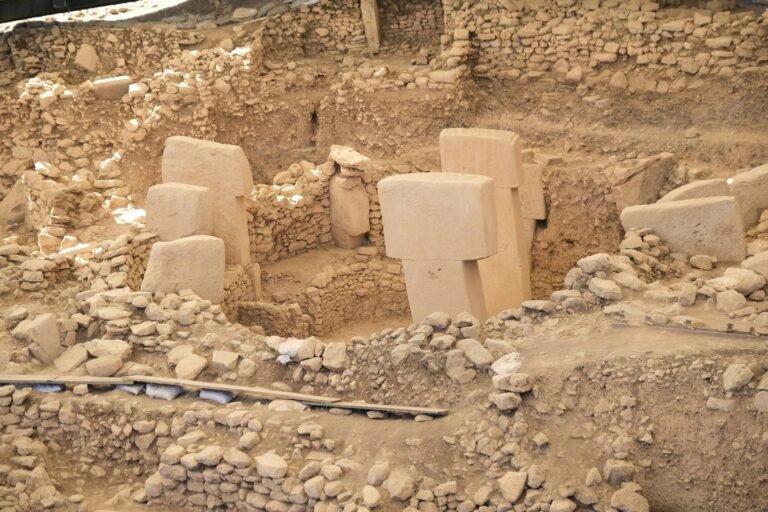
Berlin, Germany – In an unexpected turn of events, a site designated for a solar power station in a rural area of Germany has become the scene of an exceptional archaeological discovery. Excavation work revealed a grave believed to belong to a person of princely stature from ancient times, sparking a wave of interest in scientific and historical circles.
Discovery Details and Archaeological Intervention
Local authorities announced that construction-related excavations led to the uncovering of burials and funerary artifacts of a luxurious nature. Consequently, excavation teams took immediate action to halt work in part of the site to ensure the findings were accurately studied and documented according to rigorous scientific standards, preserving the integrity of the pieces and the site’s historical significance.
Indicators of Social Status
Archaeological experts noted that initial indications strongly suggest the grave dates back to an early period of European history. Experts based their assessment on the finding of intricate tools, ornaments, and high-end metalwork, items typically reserved for the elite class or local leadership. These artifacts are strong evidence of the occupant’s high social standing, giving this discovery exceptional importance for understanding social hierarchies of that era.
The Value of Archaeological Studies in Infrastructure Projects
Researchers emphasize that this discovery reaffirms the critical necessity of conducting archaeological studies alongside modern infrastructure projects. Urban expansion and energy projects often open doors to unknown historical layers, contributing to modifying or reshaping our understanding of human settlement history and the distribution of power in Europe across the ages.
Scientific Analysis to Uncover Buried Secrets
The excavation team confirmed that the discovered artifacts will undergo precise analysis using the latest laboratory techniques. These studies aim to determine the exact age of the items and their nature of use, in addition to conducting anthropological studies on skeletal remains—should they be available—to build a complete picture of the occupant’s identity, life conditions, and surrounding environment.
Germany: A Repository of Historical Secrets
Specialists believe this event adds to the series of discoveries that bolster Germany’s archaeological value, proving that the ground in many regions still holds historical secrets yet to be revealed by excavations. Thus, every construction process in potential archaeological zones becomes a valuable opportunity to add a new chapter to the extensive European historical record, making coordination between infrastructure companies and archaeologists a fundamental pillar for preserving human heritage.