
Washington, USA – Discrepancies in official narratives between the United States and Iran are escalating regarding potential security and nuclear arrangements. Currently, attention is focused on the Strait of Hormuz as a vital artery for global energy. While the American side speaks of imminent field cooperation, it is met with a categorical Iranian denial of any agreements affecting nuclear sovereignty or national resources. Accordingly, the US-Iran tension at this stage represents a conflict of political narrative before it becomes a field conflict, leaving the future of de-escalation in a state of uncertainty.
Proposal to Transfer Uranium to the US and Security Coordination in Hormuz
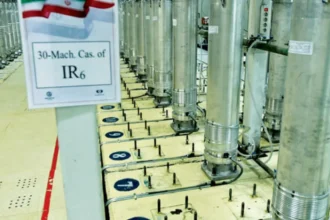
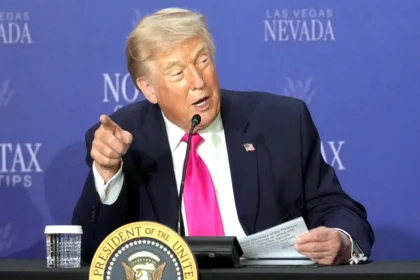
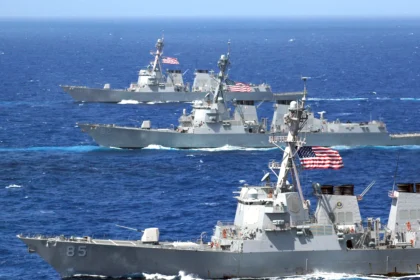
Media reports, quoting statements by Donald Trump, revealed that the United States is seriously considering retrieving highly enriched Iranian uranium and eventually transferring it to US soil as part of broader nuclear understandings. Obviously, Washington is also working, according to “Axios,” on security coordination with Tehran to secure navigation in the Strait of Hormuz by removing sea mines. As a result, the US administration promotes a negotiating path that ensures the stability of global energy supplies, considering these steps the only entry point to reducing years-long tensions.
Categorical Iranian Denial of Nuclear Material Transfer Proposals and Sovereignty
In contrast, these statements were met with a decisive rejection from Tehran. Iranian officials told “The Wall Street Journal” that the proposal to transfer uranium to the United States was not even discussed. Certainly, Iran considers this suggestion a blatant contradiction of the principle of national sovereignty and its nuclear rights. Accordingly, the US-Iran tension persists amid a significant trust gap; while Iran confirms the Strait of Hormuz remains open to international navigation as a calming gesture, Western sources doubt that sea mine risks have been fully eliminated, keeping the region in a state of cautious anticipation.