
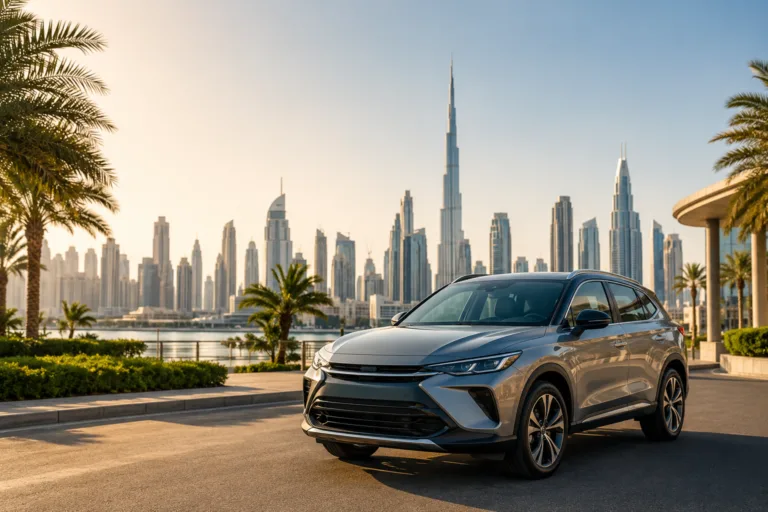
Dubai, United Arab Emirates – Car-buying criteria in the UAE are gradually shifting, as consumers increasingly focus on the actual cost of owning a vehicle throughout its lifespan rather than comparing only the purchase price, specifications, or features.
Fuel efficiency, maintenance and insurance costs, spare-parts availability, warranty coverage, and resale value are becoming more prominent considerations, particularly as the number of available brands and models continues to grow and long-term operating costs vary widely.
The Purchase Price Does Not Reveal the Full Cost
The cost of owning a car extends well beyond the amount paid at the time of purchase. It also includes financing instalments, insurance, registration, routine maintenance, repairs, fuel, road tolls, parking charges, and depreciation over time.
As a result, some buyers may prefer a vehicle with a slightly higher initial price if it offers a longer warranty, lower fuel consumption, or more predictable maintenance costs, potentially reducing total expenditure over several years of ownership.
In the used-car market, service history, mechanical condition, approved specifications, and ease of resale are becoming increasingly important. Dubai’s Roads and Transport Authority provides technical inspection and vehicle condition report services, helping buyers assess a vehicle before completing registration or ownership-transfer procedures.
Fuel Price Fluctuations Increase Focus on EfficiencyFuel Price Fluctuations Increase Focus on Efficiency
Although petrol and diesel prices in the UAE declined in July 2026 following four consecutive months of increases, the monthly review of fuel prices continues to make consumption efficiency an important factor in calculating a vehicle’s future cost, particularly for daily commuters and households operating more than one car.
The growing focus on efficiency does not necessarily indicate weaker demand for sport utility vehicles. Instead, buyers are increasingly seeking a balance between interior space, performance, and fuel consumption rather than treating size and operating economy as separate considerations.
Advances in conventional engines and the wider availability of hybrid systems have also expanded the choices available to motorists seeking to reduce fuel consumption without making a full transition to electric vehicles.
Hybrid and Electric Vehicles Enter the Value Equation
The UAE’s National Electric Vehicles Policy supports the wider adoption of electric and hybrid vehicles, the development of a nationwide charging network, market regulation, and the creation of a supportive environment for users and manufacturers.
However, the comparison between conventional, hybrid, and electric vehicles is no longer based solely on energy costs. According to a PwC report on electric mobility in the UAE, electric vehicles offer lower energy costs, but their total cost of ownership may remain slightly higher because of the initial purchase price and insurance costs. The financial outcome therefore depends on driving patterns, annual mileage, and access to charging facilities.
Resale Value Can Determine the Final Choice
Resale value is emerging as one of the most significant indirect factors in the purchasing decision. A vehicle that retains a larger proportion of its value can offset a substantial part of its operating and maintenance costs when it is sold or traded in.
A reputation for reliability, the availability of service centres, spare-parts prices, warranty duration, and demand in the used-car market all influence a vehicle’s future value. This is encouraging buyers to consider the eventual resale stage before completing the initial purchase. Current trends suggest that competition in the UAE automotive market is no longer limited to price, engine performance, or technological features. It increasingly depends on a broader value proposition combining reliability, efficiency, after-sales service, operating costs, and long-term vehicle value.