Brussels, Belgium – European stock markets opened sharply lower on Thursday, weighed down by renewed geopolitical tensions in the Gulf region. These tensions have dampened investor risk appetite.
The decline comes amid concerns that the fragile truce between the United States and Iran could collapse. Meanwhile, news has emerged of stalled diplomatic efforts to achieve peace in the region.
Key indicators performance
By 10:02 GMT, the market was predominantly red. The pan-European Stoxx 600 index was down 0.4%. Among national indices, Germany’s DAX was down 0.5%, and France’s CAC 40 was down 0.4%. The UK’s FTSE 100 suffered the biggest loss among its peers, falling 0.7%.
Field tensions are putting pressure on markets.
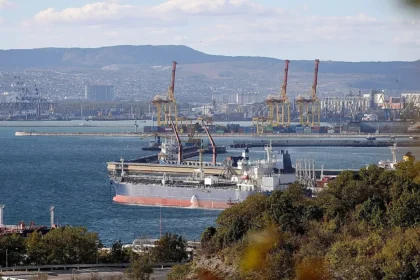
These selling pressures stem from reports published by The Wall Street Journal, which confirmed that US forces carried out new military strikes inside Iranian territory on Wednesday. This was in response to drone attacks targeting commercial ships in the Strait of Hormuz.
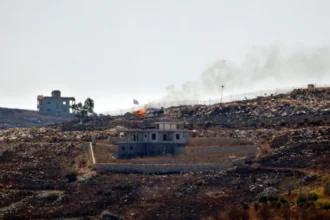
These developments coincided with the Kuwaiti army’s announcement that it had intercepted missile and drone attacks, a sudden escalation that ended a period of relative calm that had lasted for weeks. Field reports indicated that US forces successfully shot down a drone and destroyed a command post belonging to the Iranian Revolutionary Guard Corps (IRGC) near the city of Bandar Abbas. The IRGC vowed to retaliate for these attacks, further complicating the already uncertain situation.
Oil continues its rise
In this climate, energy markets reacted strongly to the escalation, with Brent crude futures rising 2.6% to $96.72 a barrel.
Although prices have stabilized below the $100 mark, current levels remain significantly higher than before the conflict began nearly three months ago.
It is worth noting that uncertainty surrounding the path to a lasting peace in the region remains the biggest obstacle to the stability of financial markets. Meanwhile, investors are awaiting any signs of a diplomatic breakthrough. Investment options remain under pressure from geopolitical factors that threaten global supply chains and energy prices. This is driving traders toward caution and a search for safer havens amidst the sharp fluctuations in global stock markets.