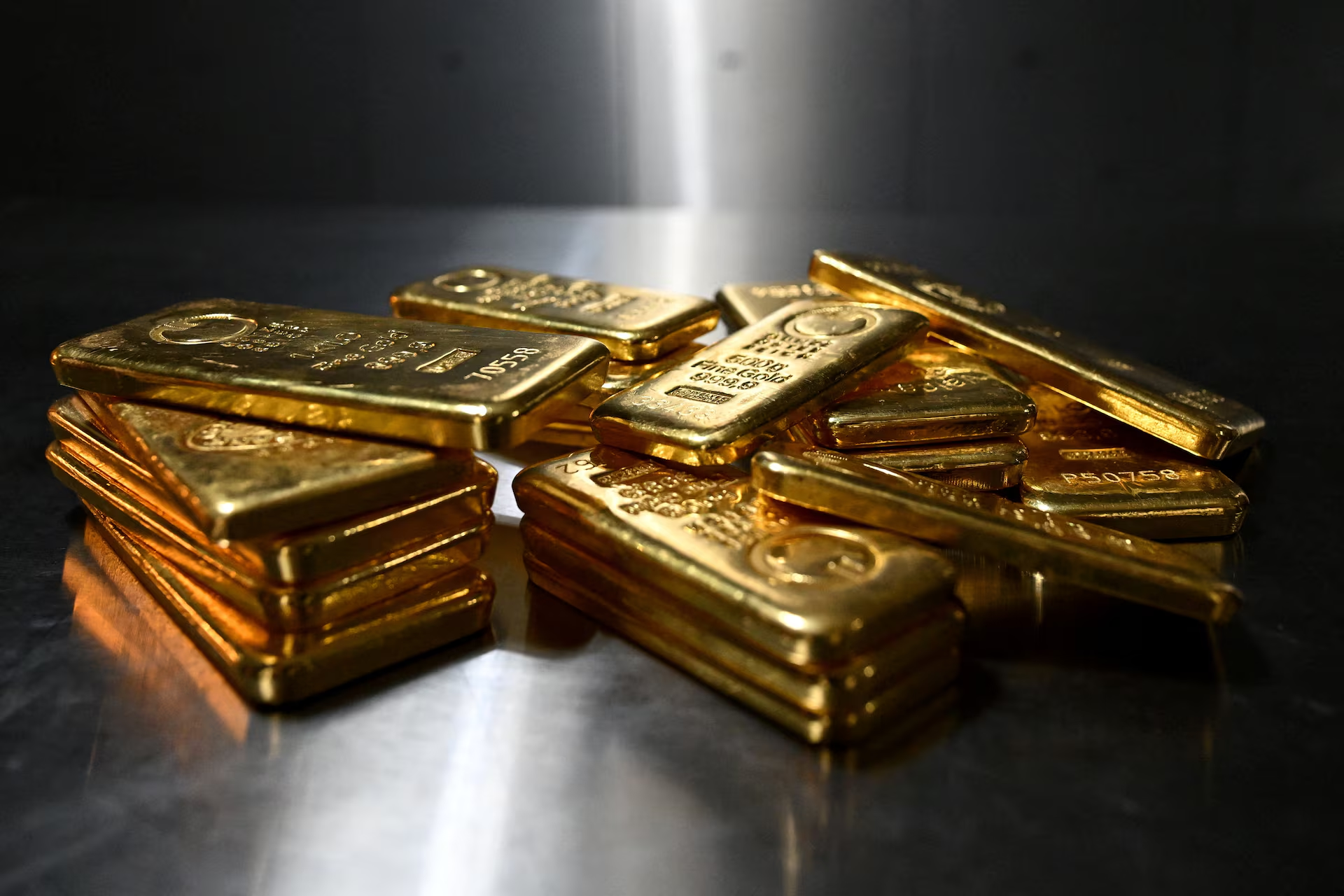
Washington, DC – Gold is on track for a slight weekly decline, weighed down by recent US economic data showing a sharp jump in inflation driven by the ongoing regional conflict. This has reinforced expectations that interest rates will remain high for an extended period. Gold fell as much as 0.8% to near $4,615 an ounce, marking a total decline of approximately 2% since last Friday.
Interest rates and inflation are threatening the yellow metal.
April data from the United States showed wholesale inflation rising at its fastest pace since 2022. At the same time, the consumer price index climbed by the largest amount since 2023.
This inflationary environment led to a surge in the dollar index and 10-year Treasury yields. These are factors that traditionally put downward pressure on gold, which does not yield interest and is priced in US dollars.
With the near-total closure of the Strait of Hormuz, a vital energy chokepoint, ongoing, diplomatic efforts to end the Iran nuclear deal have stalled. This has prolonged the energy crisis and kept inflation fears at their peak. The oil market was on track for a weekly gain, with West Texas Intermediate crude approaching $102 a barrel on Friday.
Market volatility and hedge fund bets
Gold has traded within a narrow range since its sharp decline in the early days of the conflict. It has lost more than 12% of its value since the war began. Despite this lackluster performance, Ryan McKay, senior commodities strategist at TD Securities, indicated that hedge funds and commodity trading advisors may begin accumulating new long positions. This is due to current pricing scenarios that suggest the metal’s appeal as a long-term safe haven, despite short-term pressures.
In other metals markets, silver rose by about 11% during May, fueled by speculative interest in industrial metals. This led to a decline in the gold-to-silver ratio. Traders interpreted this as a sign that the white metal had become relatively “cheap” compared to gold.
Indian restrictions put pressure on demand
On the demand side, India (the world’s second-largest gold consumer) tightened import rules for the precious metal. It also doubled tariffs on gold and silver in an attempt to support its struggling currency, the rupee. These protectionist measures negatively impacted market sentiment and actual demand across Asia.
By 8:58 a.m. Singapore time, spot gold had fallen 0.6% to $4,623.11 an ounce. Silver declined 1.3% to $82.47. Platinum and palladium saw mixed performance amid a rebound in the dollar index, which rose 0.9% this week.