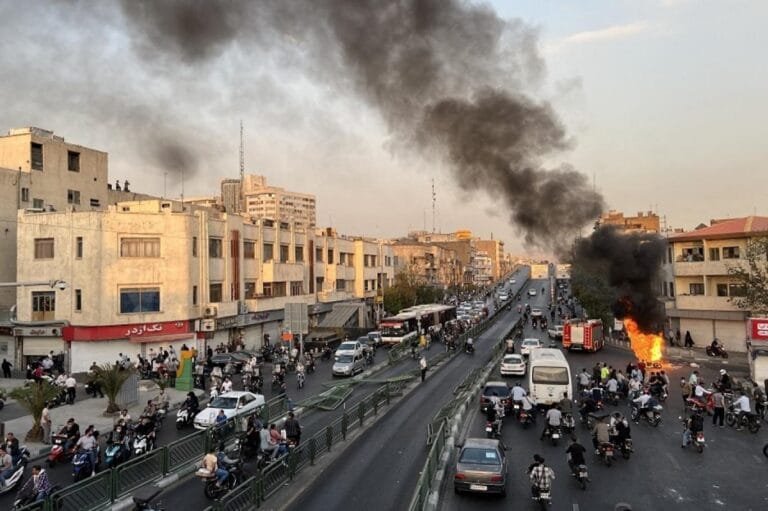
Tehran, Iran – Widespread protests in Iran have entered their fourth week, amid official and media reports of massive material losses in Mashhad, the spiritual and commercial capital of Khorasan Razavi province. The city is a key center of the movement that began in late December. According to Mashhad officials and local media, the damage to the city’s property has exceeded 2 trillion tomans. This includes the destruction of bus stations, public service vehicles, and traffic lights. In addition, government buildings and banks have been damaged, and public service infrastructure has suffered losses. Commercial activity in the historic Reza Bazaar and major streets such as Ahmadabad and Modarres has been disrupted as a result of the strikes and clashes.
The protests began on December 28th in Tehran’s Grand Bazaar and quickly spread to Mashhad and other major cities. Their escalation stemmed from the collapse of living standards caused by soaring inflation and the erosion of citizens’ purchasing power. Additionally, merchants and tradespeople staged strikes in protest against tax policies and the rising prices of basic goods. The chants gradually shifted from economic demands to slogans opposing the regime’s overall policies. A significant discrepancy exists between government and international figures regarding the human toll. International and human rights reports indicate that the nationwide death toll could reach 12,000 to 20,000, while official statistics are limited to only 2,000 to 3,000 deaths.
Despite the high level of physical violence, the movement in Mashhad was characterized by a strong labor and economic focus. This led to confrontations centered on the closure of markets and vital centers, reflecting the magnitude of the economic and social pressures facing Iran. These developments place Mashhad, the country’s second-largest city, at the heart of a crisis where demands for improved living conditions are intertwined with political and security grievances.