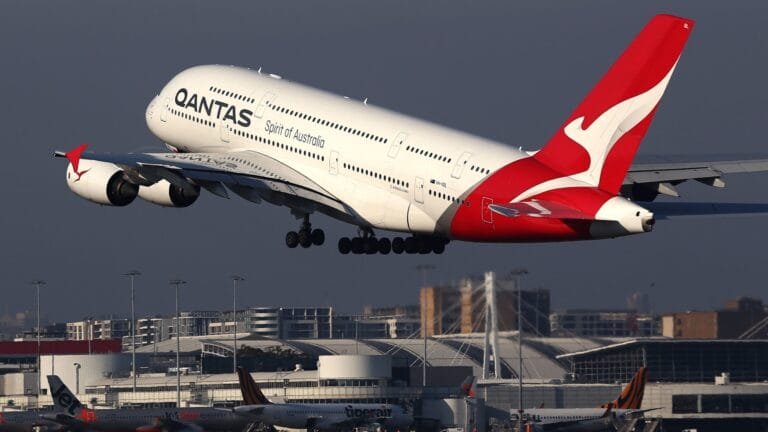
Sydney, Australia – Qantas, Australia’s national carrier, announced significant updates to its financial outlook on Tuesday. It raised its fuel cost estimates considerably and decided to postpone a planned share buyback program.
These moves come as a result of the instability and disruption to global oil markets caused by the ongoing conflict in the Middle East. This conflict has led to severe disruptions in energy supply chains.
Jet fuel prices have doubled
In an official statement, the company explained that jet fuel prices have seen sharp and unprecedented increases, more than doubling compared to previous levels.
Based on these new figures, Qantas has raised its estimated fuel bill for the second half of the 2026 financial year to between A$3.1 billion and A$3.3 billion (US$2.20 billion to US$2.34 billion). This represents a significant jump from previous forecasts, which had anticipated a figure of around A$2.5 billion. This places additional pressure on the company’s profit margins in the current geopolitical climate.
Hedging gap and market risks
The Australian airline indicated that, despite hedging a significant portion of its exposure to volatile crude oil prices, it still faces substantial exposure and high risks specifically related to jet fuel prices. These prices have been directly impacted by military operations and disruptions in production areas and vital shipping lanes in the Middle East. These financial pressures have led the company to postpone its share buyback program. This decision was made to ensure sufficient cash flow to withstand ongoing fluctuations in operating costs, which represent the biggest challenge for the global aviation sector in 2026.
Changes in traveler behavior
Regarding air traffic, Qantas stated that it continues to observe strong and sustained demand for international travel, particularly to Europe.
The company noted a significant shift in customer behavior, with travelers actively seeking alternative routes and altering their usual flight paths to avoid areas of tension and airspace affected by conflict in the Middle East. The company concluded its statement by affirming that it will continue to monitor global market developments and adjust its operational and financial plans accordingly. It also emphasized that energy security and operational sustainability remain its top priorities during this critical period in the history of the aviation industry.