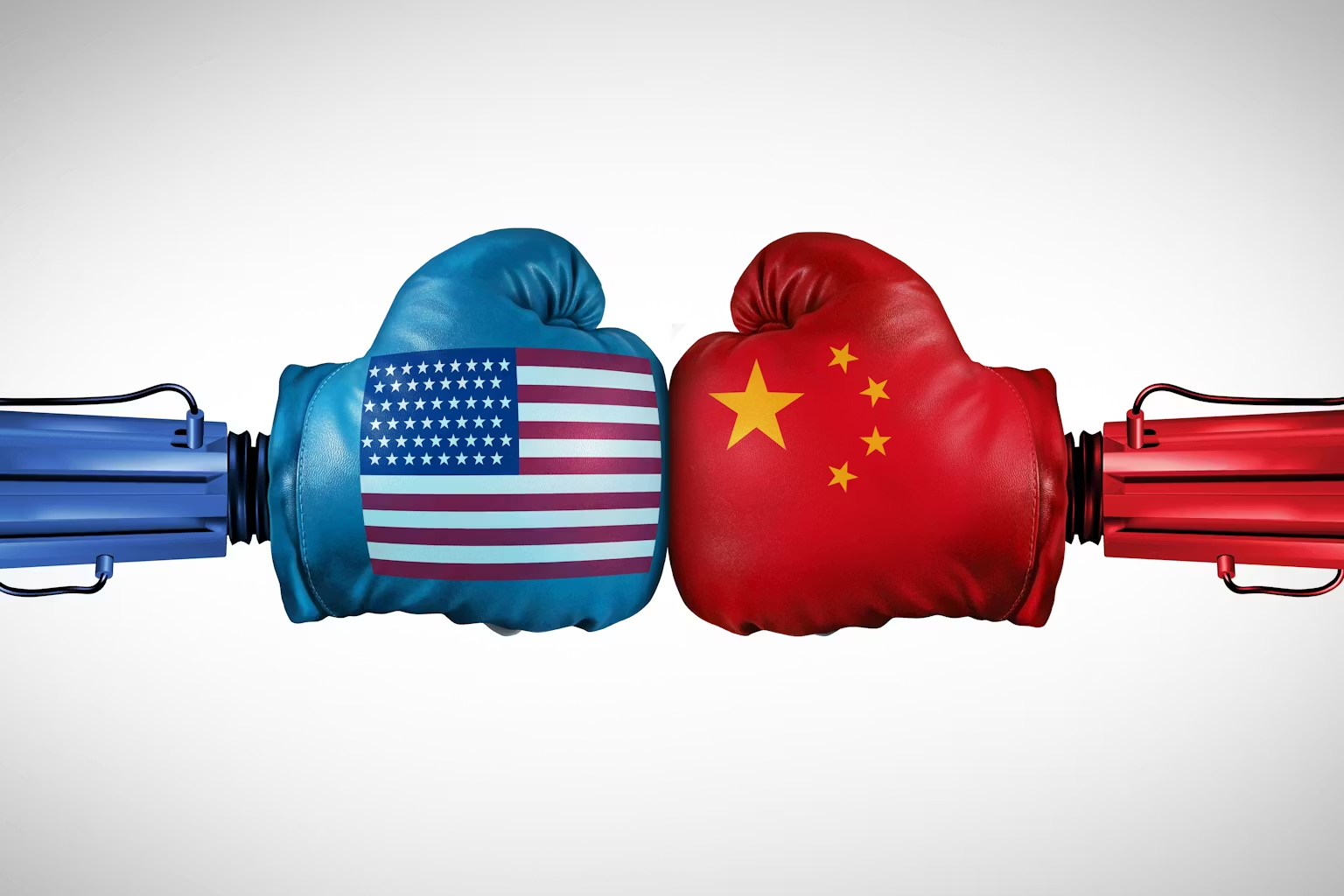
Washington – The geopolitical rivalry between the two largest economic powers in the world has entered a brand-new strategic turning point. The features of an open cyber confrontation between them emerge as a primary headline for contemporary power balances on the international stage. Relations between Washington and Beijing are witnessing an unprecedented escalation across high-tech portfolios and electronic security. Global anxieties are mounting regarding the transformation of this frantic technological conflict into a state of total digital isolation. Both nations are enforcing accelerated restrictions on the movement of smart applications, semiconductor manufacturing, and advanced communication networks. Each power seeks to impose its digital hegemony and protect its informational spaces from infiltration.
From Traditional Economics to the AI Arena
The fierce competition between both factions shifted from the scope of traditional trade and tariffs toward pioneering the digital future. Issues of developing artificial intelligence techniques and manufacturing precise semiconductors have become the primary driver of the current conflict. The US administration imposed a broad embargo on exporting advanced chips and sensitive technological equipment to Chinese markets. Washington tightened its legal procedures against giant Chinese tech corporations under the pretext of protecting national security. American reports accuse those companies of gathering vital and massive data for the benefit of intelligence agencies in Beijing.
Conversely, the Chinese government intensified its national endeavors to reduce reliance on Western frameworks and software. Beijing strongly supports local industries to innovate integrated national alternatives for precise electronic components. China doubled its public investments across cloud computing spheres, alongside fifth and sixth-generation communication networks. These defensive steps aim to build a solid technological wall completely independent of American patents. Communist Party leaders believe that absolute digital sovereignty represents the sole guarantee for political and economic stability.
Exchanging Digital Espionage Accusations and Infrastructure Infiltration
The severity of mutual accusations between decision-making capitals has escalated regarding continuous waves of cyberattacks. Washington accuses professional hacker groups sponsored by Beijing of executing infiltration operations against American energy and water frameworks. The Chinese Foreign Ministry rejects these claims entirely, considering them flimsy political falsehoods. Beijing, in turn, accuses the United States of practicing wide-scale cyber espionage activities targeting major universities and governmental institutions.
This hidden warfare has caused tension in diplomatic relations and disrupted security coordination channels between the two nations. Frequent assaults compel private corporations to update protection protocols and spend massive budgets to repel breaches. Security experts believe that these mutual strikes represent a genuine war of attrition for defensive and informational capabilities. Everyone fears the transformation of these virtual skirmishes into complete paralysis across vital public service facilities for civilians.
Establishing Digital Boundaries and Their Repercussions on Global Markets
Technology experts predict that the world is heading gradually toward a massive, irreparable technological division. This tension might result in the emergence of two separate digital ecosystems led independently by the United States and China. The division encompasses operating systems, vital supply chains, and the core infrastructure of global internet networks. This environment negatively impacts investment flows, trade freedom, and consumer product prices globally. Monitoring the details of an open cyber confrontation between them remains the most hazardous and influential issue for the future of human development in 2026.