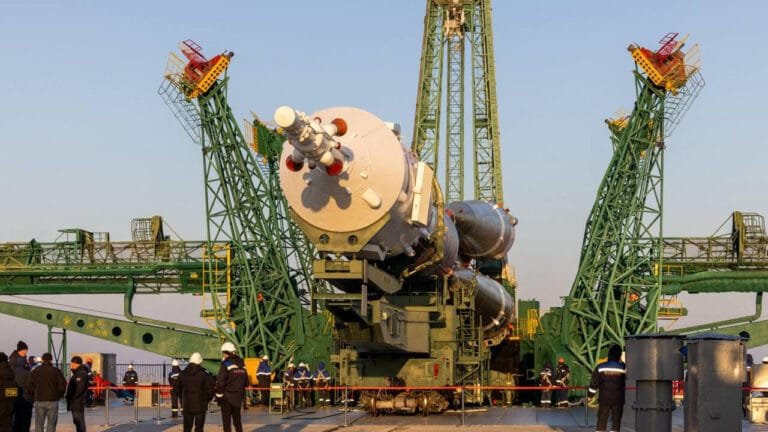
Moscow, Russia – The Russian space agency announced today the launch of a new spacecraft intended to support space programs in Ecuador, Iran, and Belarus. This move reflects Moscow’s ongoing expansion of its international partnerships in space technology.
The agency explained that the spacecraft was launched according to a precise schedule, emphasizing its readiness to carry out multiple scientific and technical missions. These missions include collecting space data, developing satellite communication capabilities, and supporting joint scientific research between the three countries and Russia.
Russian officials noted that this cooperation represents a tangible boost to the exchange of space expertise and technologies. It also demonstrates Moscow’s commitment to expanding its influence in the international space sector and provides partner countries with access to Russia’s latest technologies in this field.
Sources also confirmed that the joint space project aims to develop the three countries’ capabilities in communications and space surveillance. It also aims to utilize scientific data in various economic sectors, including agriculture, weather forecasting, and navigation.
This launch is part of Russia’s strategy to solidify its position as a major player in the global space race. This comes at a time when major powers are accelerating their efforts to strengthen their technological and research presence in Earth orbit.
Experts believe this cooperation reflects Moscow’s focus on strengthening scientific and technological collaboration with emerging spacefaring nations. This approach leads to the development of a broader international cooperation network and could open up opportunities for future space projects, including joint satellite launches and training and development programs for space personnel.
This move is expected to play a significant role in enabling Ecuador, Iran, and Belarus to expand their space programs. These countries will also benefit from Russian expertise in satellite management and operation, thus enhancing their presence on the international space map.