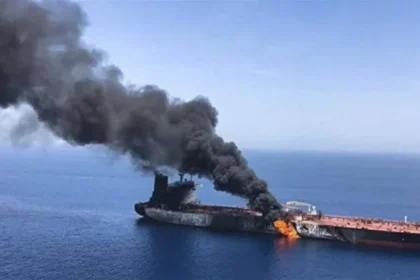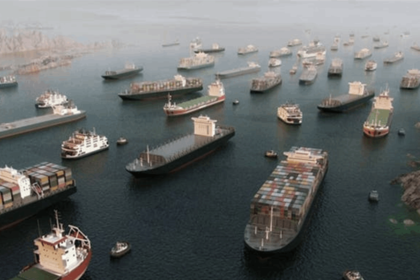

Tehran, Iran – A heated war of words erupted between Tehran and Washington on Saturday. Iranian Parliament Speaker Mohammad Bagher Ghalibaf launched a scathing attack on US President Donald Trump, accusing him of spreading misinformation about the progress of understandings between the two countries. He also threatened to end freedom of navigation in the Strait of Hormuz if the US naval blockade continues.
Qalibaf: 7 lies in one hour
In a fiery post on his X account, Qalibaf refuted Trump’s recent statements, saying, “In one hour, the US president made seven statements, and all seven were lies.” He added defiantly, “They didn’t win the war with these lies, and they certainly won’t succeed in negotiations.” He emphasized that the continued US naval blockade means “passage through the Strait of Hormuz will not remain free.” He further clarified that navigation through the strait must be fully coordinated with Tehran and according to the routes it designates. Qalibaf’s response came after US claims alleging joint coordination for the export of enriched uranium. There were also rumors that Tehran was prepared to suspend its nuclear program indefinitely, reports which Tehran described as completely unfounded.
Trump: “The bombs will fall” and the uranium is under control
Speaking to reporters aboard Air Force One, Trump delivered a series of threats and promises laced with cautious optimism. He categorically rejected the idea of Iran charging any transit fees in the Strait of Hormuz, stating, “No! Absolutely not. There will be no fees.” In a notable escalation, Trump asserted that the United States would seize Iran’s highly enriched uranium stockpile “by any means necessary.” He warned that the failure of the talks would lead to “more aggressive” measures. Furthermore, Trump set next Wednesday as the deadline for reaching an agreement, threatening that if the ceasefire is not extended, “the bombs will start falling again” to prevent Tehran from acquiring a nuclear weapon, while the blockade on Iranian ports will continue.
International anticipation and Wednesday’s date
Despite his threatening tone, Trump said he had received “relatively good” news and that change in the region “must happen.” He also linked the regional crisis to his international relations, noting that the Chinese president was pleased with the imminent reopening of the Strait of Hormuz. He described his upcoming meeting with Xi Jinping as “historic.” This media confrontation sets the stage for a crucial week. Between Qalibaf’s denial and Trump’s Wednesday deadline, the world is watching to see whether diplomacy will prevail or whether the region will slide once again into a full-blown military confrontation starting in the waters of the Strait of Hormuz.