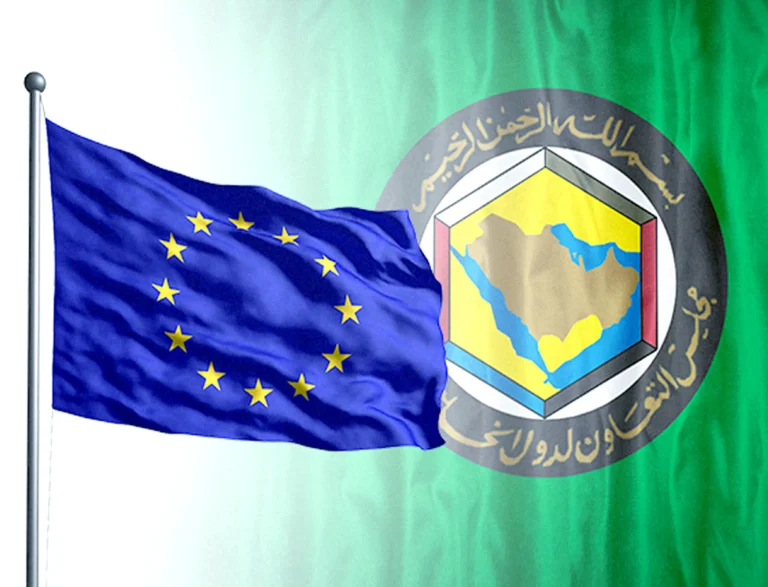
Brussels, Belgium – EU foreign ministers reaffirmed their commitment to strengthening the strategic partnership with the Gulf Cooperation Council (GCC) countries,
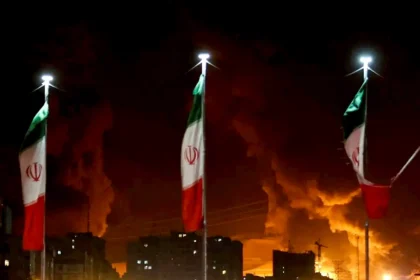
emphasizing the need to maintain freedom of navigation in the Strait of Hormuz.
They also stressed the importance of consolidating the ceasefire following recent developments in the region.
They reiterated their opposition to Iran acquiring nuclear weapons,
considering it essential for the security and stability of the Middle East.
Strategic partnership with the Gulf countries
During their meeting in Brussels, EU foreign ministers met with representatives from the Gulf Cooperation Council (GCC)
to discuss ways to strengthen political and security cooperation between the two sides.
The EU High Representative for Foreign Affairs and Security Policy, Kaja Kallas,
stated that the EU seeks to consolidate its strategic partnership with the Gulf states.
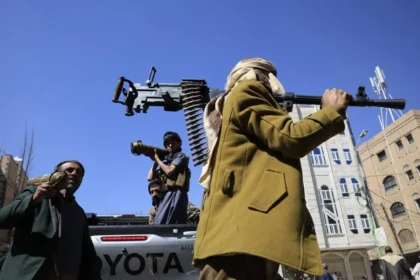
She affirmed the continuation of the EU’s Operation Aspidis, which aims to protect commercial shipping
from attacks targeting vessels in the Red Sea, particularly those carried out by the Houthis.
She emphasized that the security of maritime trade routes is a European priority.
European stance on Iran
The EU reiterated its position calling for preventing Iran from acquiring nuclear weapons,
considering this a fundamental pillar for maintaining regional stability and reducing the risk of escalation.
The ministers also stressed the importance of upholding the ceasefire in the region.
They further emphasized the need to protect freedom of navigation in the Strait of Hormuz as a shared international interest.
Supporting the two-state solution
Regarding the Palestinian issue, Callas explained that the peace process remains stalled.
Nevertheless, the European Union will continue its support for the Palestinians.
She added that the recent international conference in support of Palestine succeeded in mobilizing nearly €900 million.
She reaffirmed the EU’s commitment to the two-state solution as the only way to achieve a just and lasting peace.
The foreign ministers of the 27 member states also reiterated
that Israeli settlements in the occupied Palestinian territories are illegal under international law.
They renewed the EU commitment to continuing its diplomatic efforts to support stability and peace in the region.