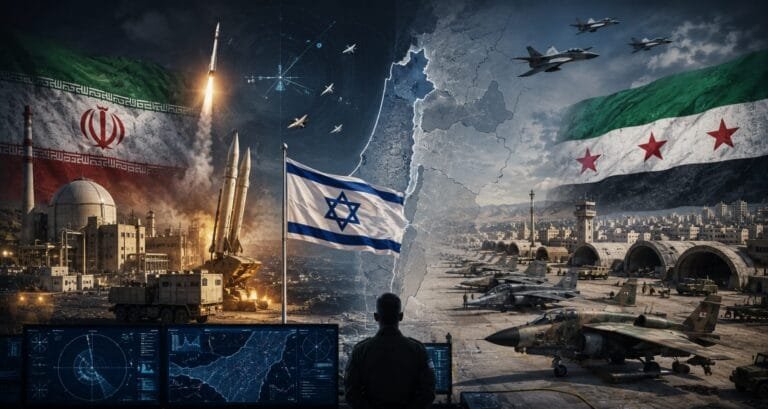
Tel Aviv, Israel – Israel faces a security phase characterized by simultaneous military developments on two distinct fronts. The first is in Iran, where concerns persist regarding the future of the nuclear program and Tehran’s ability to rebuild its missile and military capabilities. The second front is in Syria, where the new regime is working to rebuild the military institutions, including the air force and air defenses. While the nature of the threat differs on each front, their convergence necessitates a reassessment of the surrounding military environment by the Israeli security establishment.
Iran: Concerns over rebuilding nuclear capabilities
Israel views developments in Iran as a long-term strategic threat, particularly given ongoing concerns about Tehran’s ability to rebuild its nuclear and missile programs following recent strikes. Israeli attention is focused on the extent of damage inflicted on nuclear facilities, as well as the degree to which Iran retains its expertise and infrastructure. This could allow it to restore its capabilities in the near future.
Syria: Monitoring the rebuilding of the air force
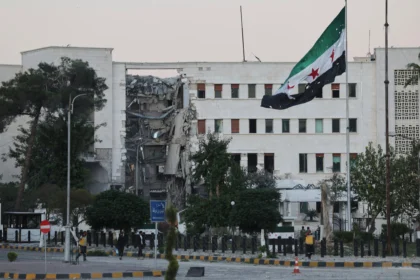
In contrast, Israel is closely monitoring the efforts of the new Syrian regime to rebuild its armed forces, with particular attention to the air force and air defenses. Israel believes that Damascus’s transition from military reorganization to the acquisition of modern fighter jets, radars, and advanced air defense systems could potentially restrict Israel’s freedom of aerial operations in the future. This is especially significant given Syria’s geographical location and its proximity to the Israeli border.
Two different threats and intertwined calculations
The nature of the threat differs between the two fronts. For Israel, Iran represents a long-term strategic threat related to its nuclear program, missiles, and long-range military capabilities. Syria, on the other hand, poses a direct and immediate military challenge, especially if it succeeds in building a more organized and better-equipped army with external technical and military support. In this context, Israel is closely monitoring the nature of military cooperation between Damascus, Russia, and Turkey, and its potential impact on the capabilities of the Syrian army.
The synchronization of the two paths imposes a new equation.
Israel’s greatest concern lies in the possibility that the rebuilding of some Iranian capabilities will coincide with the development of the Syrian army and air force. While there is no public evidence to prove that Iran possesses a ready-made nuclear bomb, its continued ability to rebuild its nuclear program, in parallel with the development of Syrian air and defense capabilities, could compel Israel to reassess its security calculations and military plans in the region in the coming period.