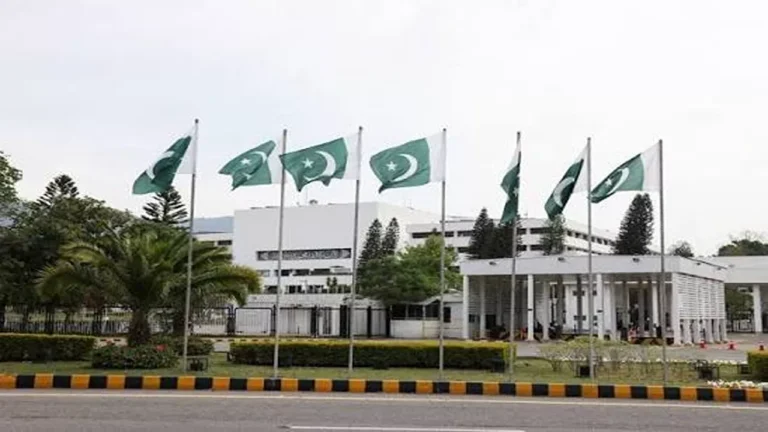
Islamabad, Pakistan – The Pakistani Foreign Ministry announced on Thursday that Islamabad is doing “everything possible” to bring the United States and the Islamic Republic back to the negotiating table and reactivate the memorandum of understanding signed in the Pakistani capital last month, amid growing regional concerns about a renewed conflict.
Warnings of a fragile security situation and calls for dialogue
At a weekly press briefing, Pakistani Foreign Ministry spokesman Tahir Andarabi explained that his country had observed with grave concern that the security situation in the Middle East “remains precarious,” despite the relative calm of the past few days. Andarabi noted that this temporary lull had revived hopes for a transition towards a permanent and fully respected ceasefire, paving the way for diplomatic dialogue.
Andarabi reiterated his country’s firm stance in support of dialogue and diplomacy, stressing that they are “the only viable way forward.” He added: “We welcome all efforts aimed at maintaining the cessation of hostilities and resuming dialogue between Iran and the United States,” stressing that Pakistan is strongly engaged and will continue its diplomatic endeavors in this regard.
Efforts to normalize the situation in the Strait of Hormuz and revive the agreement
The official spokesperson revealed that negotiations between the concerned parties are ongoing with the aim of normalizing the overall situation, particularly containing the crisis in the Strait of Hormuz and de-escalating the military tensions. He stated that Pakistan is making every effort to bring both sides back to the Islamabad Memorandum of Understanding, “so that all issues can be resolved in accordance with the spirit of the agreement and the joint statement issued by Pakistan and Qatar on June 22.” In the same vein, Andrabi urged both Washington and Tehran to exercise “maximum restraint and fully adhere to their commitment to resume talks at the technical level,” in accordance with the terms of the signed Memorandum of Understanding and the joint statement.
Background to the escalation and renewed naval confrontations
It is worth noting that the memorandum of understanding between the United States and Iran was signed on June 18, following weeks of intensive negotiations. Its main objective was to reopen the Strait of Hormuz and end the conflict in the Middle East that erupted following US-Israeli strikes on Iran in February, after rounds of negotiations that lasted 60 days.
However, hostilities resumed on July 7 when Iran attacked commercial vessels in the Strait of Hormuz, including a Qatari liquefied natural gas tanker, accusing Washington of violating mutual understandings. This triggered a series of retaliatory US strikes against Iranian military targets. The crisis escalated further when Houthi rebels in Yemen imposed a naval blockade on Saudi Arabia, effectively expanding the war to a second vital maritime chokepoint in the region.