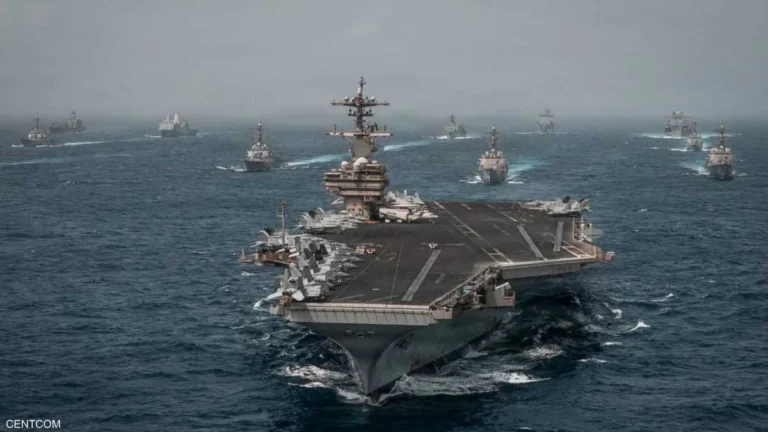
Tehran, Iran – The US military campaign against Iran is escalating, targeting bridges, tunnels, and railway lines in an attempt to cripple the regime’s ability to transport military and civilian supplies, in what has become known as “arterial warfare.” US Central Command (CENTCOM) announced it had launched strikes for the seventh consecutive night aimed at “degrading Iran’s military capabilities.” These actions are part of a campaign designed to intensify pressure on Tehran to force it to relinquish control of the Strait of Hormuz. US forces concluded the seventh night of strikes on July 17 at 9:30 PM Eastern Time.
Map of US targets
CENTCOM targeted surveillance sites, military logistics infrastructure, underground weapons storage facilities, and naval capabilities, using fighter jets, drones, and warships, along with other military assets. The US command maintains that it continues to hold Iran accountable under the direction of the commander-in-chief. Simultaneously, a comprehensive naval blockade is in place against Iranian ports, and more than 50,000 US troops are deployed across the Middle East on high alert.
Why bridges and tunnels specifically?
Given its rugged, mountainous terrain, Iran relies on a relatively limited number of bridges and tunnels to connect its southern coastal regions to the interior. This makes disrupting these connections an effective tool for isolating entire areas with minimal military effort. Instead of targeting each supply convoy or missile launcher individually, disabling a single road or railway junction can disrupt transportation for days or weeks. Longer and more expensive alternative routes are then imposed. Recent strikes have demonstrated that this approach is deliberate: Iran reported that six bridges in Hormozgan province, overlooking the strategic Strait of Hormuz, were targeted, along with energy infrastructure. Analysts believe the objectives range from disrupting Iran’s supply lines to limiting its influence in the Strait of Hormuz. This comes within the context of recent military operations that have escalated since late February 2016, targeting the regime’s military infrastructure, missile industries, and logistics networks.
The toll of the latest strikes
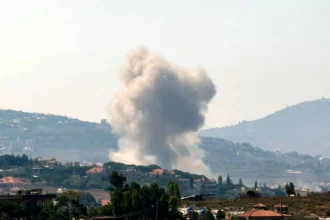
In the latest developments, authorities in Hormozgan province announced that the Shahid Mirzaei Tunnel was hit in both directions. The Rudkhaneh Shour Bridge on the Bandar Abbas-Sirjan road and two other bridges on the road connecting the Minab and Rudan junctions were also damaged.
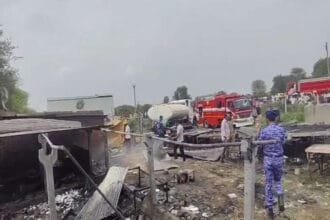
Earlier, three bridges in the Khamir district of Hormozgan province were targeted, including the Khamir Bridge, which connects Bandar Abbas to Fars province. Injuries were reported as civilian vehicles were crossing the bridges at the time of the attack.
Reports indicate that the attacks targeting bridges and energy facilities, along with the collapse of a tower at a major port, are part of a series of threats to strike infrastructure in an effort to pressure Tehran over the Strait of Hormuz.
A previous campaign also targeted the unfinished B1 Bridge in Karaj, the longest bridge in the Middle East and a key western exit route from Tehran. Additionally, the campaign targeted a bridge connecting Tabriz to Zanjan in the north of the country and a railway bridge near Kashan in central Iran.
The economic dimension: The Strait of Hormuz and energy markets
The campaign targeting land-based infrastructure is inextricably linked to the broader battle for control of the Strait of Hormuz, through which roughly 20% of the world’s crude oil supply passes via a narrow waterway that is only 33 kilometers wide at its narrowest point. The renewed escalation in July triggered a sharp jump in oil prices, exceeding 9% in a single session. This surge stemmed from fears that a complete closure of the strait would result in a daily shortfall of between 10 and 14 million barrels, a level the International Energy Agency describes as unprecedented in the history of oil markets.
This comes after US President Donald Trump declared the United States “guardian of the Strait of Hormuz,” imposing a 20% security fee on all transiting vessels. This move has far-reaching economic and geopolitical implications that extend beyond a direct military campaign. Iran had previously responded to the initial strikes of the war by declaring the strait closed and targeting transiting ships with drones, ballistic missiles, and small attack boats. This drove up marine insurance premiums to exorbitant levels and effectively paralyzed maritime traffic.
Iranian adaptation and the regional landscape
In response, Tehran resorted to rapid on-the-ground repairs and alternative routes to mitigate the impact of the strikes, along with developing underground capabilities such as missile tunnels and bunkers to protect part of its arsenal from direct targeting. Iran also opened parallel fronts by targeting infrastructure in neighboring Gulf states, including Kuwait and Oman, claiming it was retaliating against any party using its territory to launch attacks against it. As a result, the confrontation expanded beyond its immediate borders. The US campaign’s focus on bridges, tunnels, and railway lines reflects a clear military logic: maximizing impact with the fewest possible strikes by targeting geographical bottlenecks.