Washington, DC – Heated discussions took place behind the scenes at the White House, reflecting a deep division within the US administration regarding the formulation of a final strategy for dealing with the Iranian issue. The Israeli newspaper Israel Hayom, citing informed sources, reported that a high-level meeting was held on Wednesday, May 20, at the White House. This meeting reportedly sparked sharp and unprecedented disagreements among senior US government officials about how to respond to Iran’s recent actions.
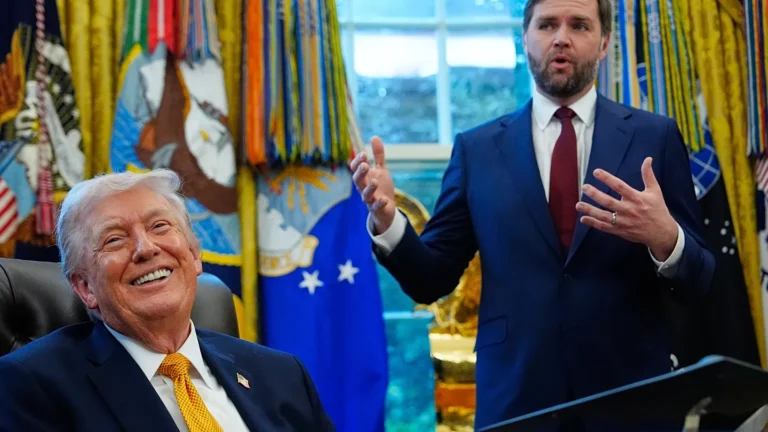
According to the report, US President Donald Trump ultimately agreed, contrary to the opinions and recommendations of the Secretary of State and the Secretary of Defense (War), and in line with the vision put forward by his Vice President J.D. Vance and his special envoys, to the option of continuing negotiations and diplomatic channels with Tehran.
The security and political team is divided: military pressure or diplomatic flexibility?
The right-wing Israeli newspaper reported that Secretary of State Marco Rubio and Secretary of Defense Pete Higgseth’s assessment was firm. They emphasized that at this critical juncture, no real concessions could be extracted from Iran without exerting maximum pressure. This includes the direct threat of military action and intensifying economic sanctions to their maximum extent.
In contrast, Vice President J.D. Vance viewed Tehran’s latest offer as a clear indication of flexibility. This offer could pave the way for a preliminary agreement that serves American interests without escalating into open confrontation.
Sources familiar with the matter told Israel Hayom that Steve Whitaker and Jared Kushner, President Trump’s special envoys, strongly supported Vance’s position during the deliberations.
This support stemmed from the results of intensive, pre-emptive talks the envoys held with leaders of Oman, Qatar, and Saudi Arabia prior to the White House meeting. These talks reinforced the option of regional de-escalation.
Arguments and verbal clashes within the framework of the American decision
According to the same source, tensions escalated significantly during the meeting when Trump launched a scathing attack on Vance and the envoys. He accused them of contributing to “buying time for Iran” with their approach. He also accused them of damaging the image of the United States and the prestige of the American presidency by making it appear hesitant.
However, Vance’s response was firm and forceful, surprising those present in the closed room. He argued that the US administration should strive to end foreign military campaigns. He also called for the return of American troops and a focus on reducing global oil prices. He then emphasized the importance of directing all efforts toward solving the domestic and economic problems of the American people.
Regional division and Netanyahu’s angry stance
On the regional level, the Israel Hayom report went on to mention Trump’s talks with Middle Eastern leaders. Citing two sources, it stated that the leaders of Israel and the United Arab Emirates, while emphasizing the need to protect their vital and sensitive facilities from any potential Iranian retaliatory attacks, strongly support pursuing “firm and immediate policies” against Tehran. In contrast, the leaders of Saudi Arabia and Qatar prefer de-escalation to avoid a return to armed conflicts that threaten economic stability.
In a related development, the newspaper quoted a senior US official as saying that Israeli Prime Minister Benjamin Netanyahu, during a phone call with Trump, expressed his deep dissatisfaction with Iran’s behavior and Tehran’s stalling tactics to buy time to develop its program.
Trump responded by emphasizing the complexity of the current situation and the significant challenges ahead. However, he reiterated his firm commitment, despite remaining open to negotiations, to the complete elimination of the Iranian nuclear threat.