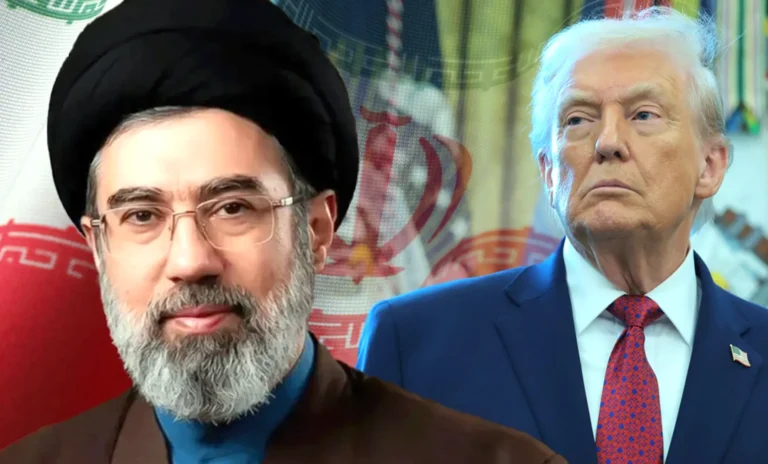
Washington, DC – The New York Times, in an investigative report published Thursday, revealed shocking information regarding the health of Iranian Supreme Leader Mojtaba Khamenei.
The report indicated that the serious injuries he sustained in the recent Israeli
attack have led to fundamental changes in the Iranian decision-making hierarchy.
Now, the leaders of the Islamic Revolutionary Guard Corps (IRGC) are the de facto rulers of the country.
Military mandate in isolation
The newspaper quoted Iranian officials as saying that Mojtaba Khamenei has delegated crucial decision-making
to Revolutionary Guard generals, due to the extreme difficulty of communicating with him directly.
The report explained that communication with the Supreme Leader is now limited to
written messages delivered through a “human chain” of highly trusted individuals.
This reinforces the hypothesis of a “leadership gap” that the Revolutionary Guard is attempting to fill to prevent the collapse of the regime.
Health status: Surgeries and presidential intervention
The newspaper painted a detailed picture of the medical condition of Iranian Supreme Leader Mojtaba Khamenei,
confirming that his face and lips suffered severe burns.
This has made it extremely difficult for him to speak since his injury.
Sources added that Khamenei underwent surgery on one of his hands and is currently awaiting
the fitting of a prosthetic leg, which was severely wounded in the attack.
In a noteworthy detail, The New York Times indicated that Iranian President Masoud Pezeshkian,
given his background as a surgeon, is personally overseeing the Supreme Leader’s treatment program.
Despite these severe physical injuries, the newspaper asserted that Khamenei remains mentally sharp and intellectually alert,
despite the strict medical restrictions imposed on him and the difficulty of accessing him except by an elite team of doctors.
Political repercussions: “The state of the generals”
This revelation explains US President Donald Trump’s recent statements about the “state of confusion” in Tehran.
The absence of Iranian Supreme Leader Mojtaba Khamenei from the public eye and the delegation of authority to the Revolutionary Guard indicate
that Iran has effectively become a “military state” run by generals behind the scenes.
While the Supreme Leader awaits a lengthy period of cosmetic and rehabilitative surgery,
the question remains as to the extent to which this “human chain” and the Guard’s commanders can maintain
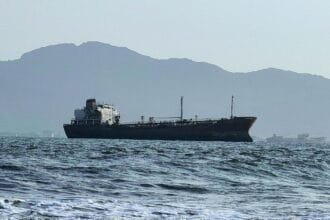
the regime’s cohesion in the face of mounting external pressures and the crippling US naval blockade.