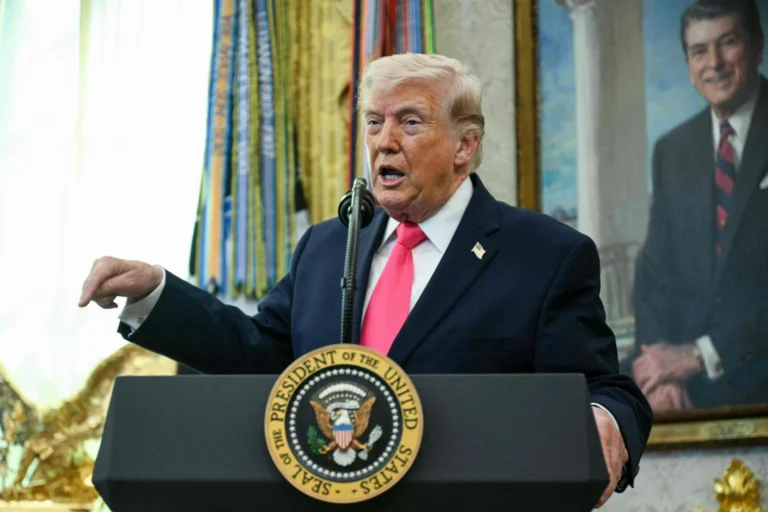
Washington, DC – In a statement that could redraw the global security map, US President Donald Trump announced that he is “seriously” considering withdrawing the United States from NATO.
Trump’s startling remarks came during an exclusive interview with the British newspaper The Daily Telegraph, published Wednesday. They also followed the refusal of European allies to support ongoing US military operations against Iran.
“A paper tiger” and a “non-reviewable” decision
Trump again described NATO as a “paper tiger,” asserting that the idea of a US withdrawal was now “off the table.”
“I’ve never been a fan of NATO,” Trump told the newspaper. “I’ve always known they’re just paper tigers, and Putin knows that perfectly well anyway.”
The US president added that he had long harbored doubts about the alliance’s credibility and effectiveness. He also argued that allies take advantage of US protection without offering anything in return during major crises.
Rubio: NATO has become a “one-way street”
The criticism wasn’t limited to the president; US Secretary of State Marco Rubio made similar remarks Wednesday morning, indicating the need to “re-evaluate” the nature of the alliance.
Rubio said, “We need to examine whether NATO is still fulfilling its mission, or whether it has become a one-way street where the United States only helps Europe, but when we need our allies’ help, they deny us the right to use bases and airspace.”
Rubio warned that if allies continue to prevent Washington from using bases to defend its interests, the alliance will lose its raison d’être for America.
Background to the crisis: European rejection of operations against Iran
This diplomatic rift comes after NATO member states, including Spain and Italy, barred US aircraft from using their air bases or crossing their airspace to carry out strikes against Iranian targets. These countries justified their refusal by citing the need for de-escalation and adherence to international law.
Trump views this “betrayal” by allies, at a time when Washington faces direct threats in the Middle East and is struggling to reopen the Strait of Hormuz, as sufficient grounds to end the decades-long defense partnership. This has thus jeopardized the future of European security.