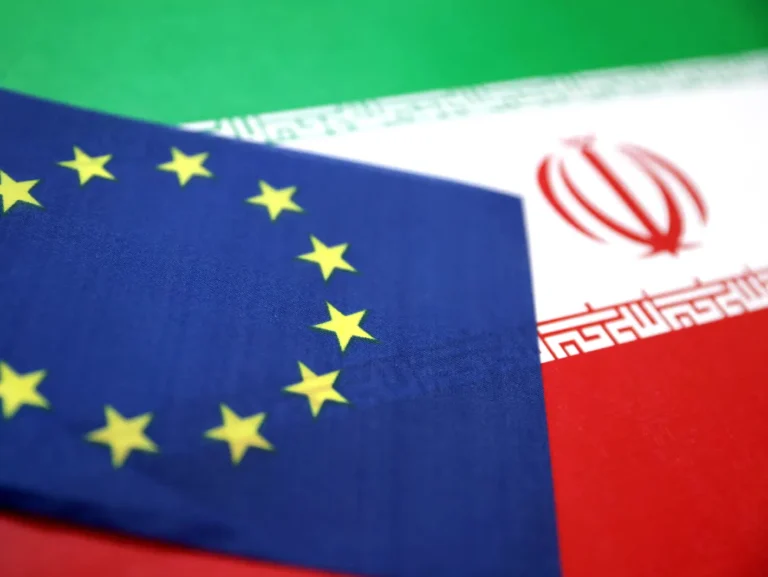
Brussels, Belgium – The European Union’s foreign policy chief, Kaya Kallas, announced on Wednesday that ambassadors from member states had approved a new and tougher round of sanctions against the Islamic Republic of Iran.
This move comes at a sensitive time, as international pressure on Tehran intensifies. It also coincides with escalating military confrontations in the region.
Targeting internal repression and its institutions
In an official letter, Callas confirmed that the new sanctions target 19 officials and entities affiliated with the Iranian regime, specifically identified as being involved in “serious and systematic human rights violations.”
She explained that the list includes security leaders, prominent figures, and institutional centers.
Furthermore, these entities have played a pivotal role in the mechanisms of repression, which have recently intensified.
The EU’s foreign policy chief stressed that the European Union “will not stand idly by and will continue to hold the Islamic Republic accountable for its actions,”
emphasizing that these sanctions are a natural and deserved response to such practices.
She added that protecting interests during wartime is crucial. Callas pointed out that the ongoing state of war
with Iran does not absolve the regime of its responsibilities towards its citizens; rather,
the EU is determined to protect its strategic interests. It is also determined to prosecute all those responsible for internal repression.
There are those responsible for internal repression carried out under the guise of armed conflict.
She added that these legal and economic measures aim to restrict the movement of these individuals and institutions.
They also aim to limit their access to financial assets within Europe.
A clear message for the future
Callas concluded her remarks by delivering a direct political message to the leadership in Tehran,
stating that “Iran’s future cannot be built on repression and intimidation.”
She considered this measure a clear message that the European community stands with democratic aspirations
and human rights, and that the use of force against civilians domestically will always be met with international isolation.
It will also be met with further economic and diplomatic pressure.
These sanctions are part of a series of escalating measures taken
by the West against Tehran since the outbreak of the full-scale confrontation on February 28th.
This deepens the economic and political crisis facing the Iranian regime both domestically and internationally.