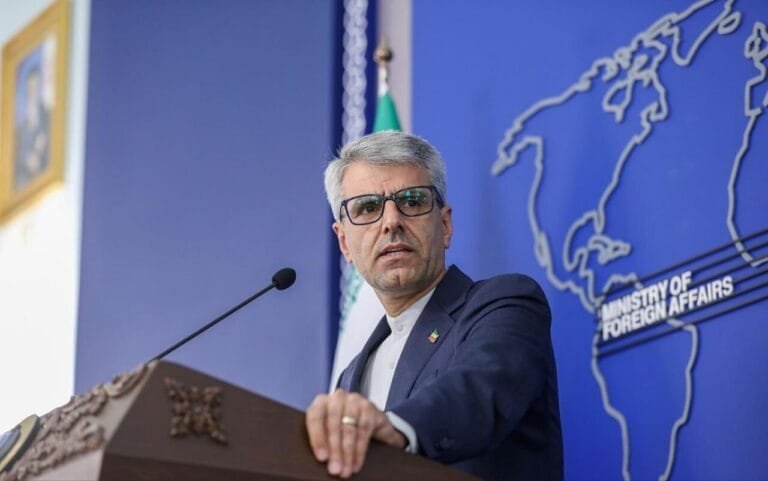
Tehran, Iran – Iranian Foreign Ministry spokesman Esmail Baghaei said his country would respond “crushingly” to any military aggression, asserting that past experience has proven that no Israeli military action could be carried out without direct coordination with the United States. Baghaei made these remarks during a press conference on Tuesday, emphasizing that “the Islamic Republic will not hesitate to defend itself,” adding, “If any evil is committed by any party, our response will be regrettable.”
These statements come amid escalating mutual threats and growing talk of potential military strikes against Iran, coinciding with intensified political and diplomatic activity in the region.
This rhetoric is an extension of repeated Iranian pronouncements in recent weeks. In a press conference in late January, Baqaei described the situation facing his country as a “hybrid war” waged by the United States and Israel, warning of a “comprehensive and regrettable” response. He asserted that Iran is “stronger than ever” after past confrontations, including the exchange of strikes in 2025. In other statements, the Iranian spokesman emphasized that Tehran is monitoring what he termed “continuous Israeli incitement and threats,” holding Tel Aviv responsible for destabilizing the West Asia region and affirming that any escalation will not go unanswered.
This escalation in rhetoric is directly linked to current developments, most notably the anticipated meeting between US President Donald Trump and Israeli Prime Minister Benjamin Netanyahu at the White House, where additional military options against Iran are expected to be discussed should the diplomatic track falter.
It also follows the round of indirect negotiations held in Muscat last week, which Baqai described as “good” in terms of testing the other side’s seriousness, noting a preliminary agreement to continue the dialogue after consultations within the relevant capitals.
In this context, Iran insists that its focus is on lifting sanctions and rejects any “partial settlement” limited to the nuclear issue alone, accusing Washington of providing “political cover” for Israel to carry out acts of aggression. The Iranian Foreign Ministry’s statements reflect a calculated escalation aimed at deterrence at a highly sensitive regional juncture where nuclear negotiations intersect with military threats. Between warning of a “crushing response” and clinging to the conditional diplomatic track, Tehran is attempting to convey a dual message: the door to dialogue remains open, but the cost of any attack will be exorbitant.